You Said Something You Regret in a Fight. Now What?
Author: Dr. Timothy Rubin, PhD in Psychology
Originally Published: September 2026
Last Updated: September 2026
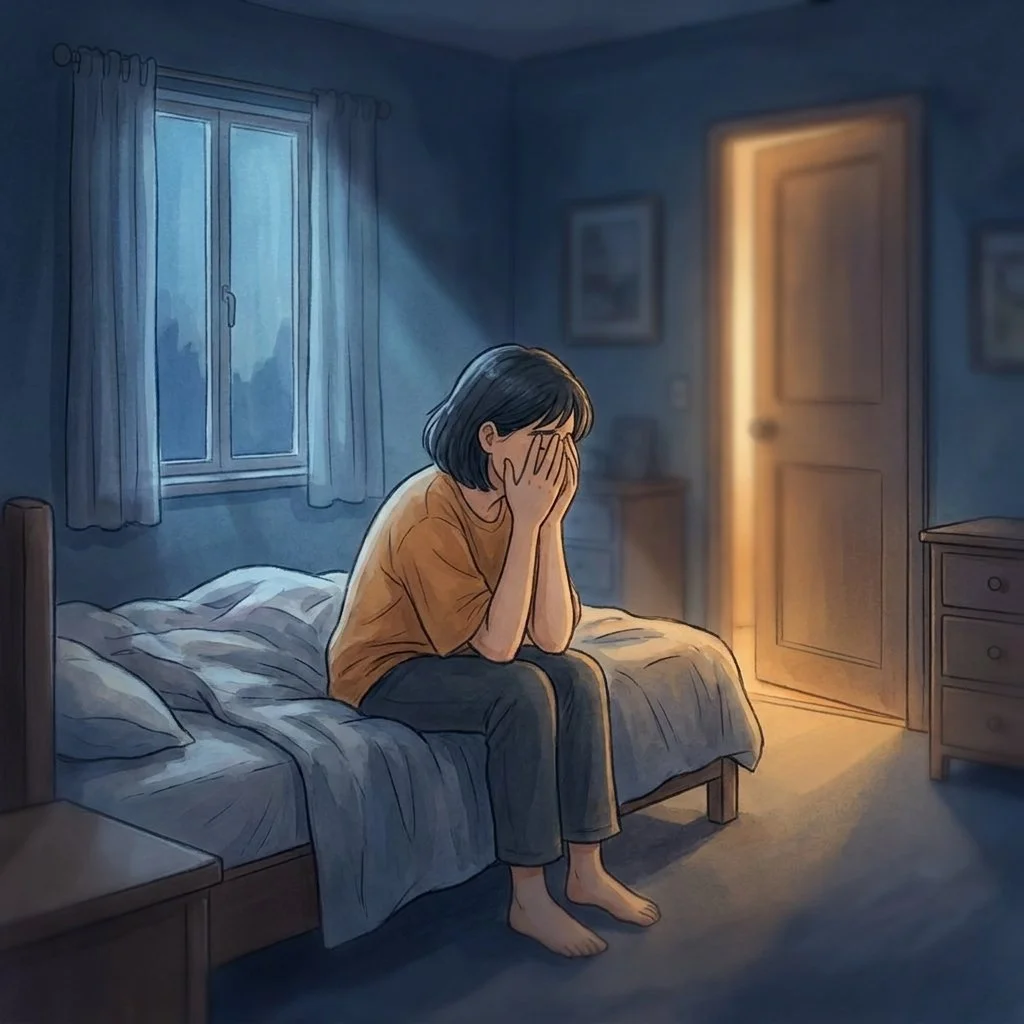
The fight is over. The sentence is still in the room.
Contents
- Why You Said the Cruelest Thing You Could Think Of
- Guilt Is Not Shame, and the Difference Decides What Happens Next
- Why the Spiral Makes Repair Harder
- How to Apologize After Saying Something Hurtful
- Why Over-Apologizing Makes It Worse
- If They Aren't Ready to Hear It
- Forgiving Yourself Without Letting Yourself Off the Hook
- When It Isn't a One-Off
- The Short Version for Tonight
- FAQ: Saying Something You Regret in a Fight
The house is quiet now. Maybe they went to bed without saying goodnight, or perhaps they are in the next room with the door shut. The argument itself has already started to blur, but one sentence has not. You hear it in your own voice, and you can still see the half-second when their face changed.
You didn't only lose your temper. You said the thing: the one you promised you would never bring up, or the "maybe we shouldn't be doing this," or the joke about what they are most insecure about. Some part of you knew where it would land. Now you are lying awake, replaying it and feeling something close to disgust with yourself.
This article is for the person who said something hurtful to their partner, not the person who heard it. (If what you're mostly feeling is the racing heart and churning stomach, that's covered in our piece on anxiety after an argument.) Here, we'll look at why the cruel sentence came so easily, why the self-disgust you feel now can get in the way of fixing it, and what a real apology contains.
Why You Said the Cruelest Thing You Could Think Of
Understanding it does not excuse it. It helps you keep from doing it again.
Anger narrows your view of the other person
When you are angry and highly aroused, your ability to see things from someone else's side shrinks. Across six studies, Yip and Schweitzer found that anger reduces perspective-taking more than sadness, disgust or a neutral mood did, and that the effect ran partly through heightened arousal. Relationship researcher John Gottman describes a related state he calls "flooding," when arousal during conflict becomes so intense that listening and careful thinking fall away.
Closeness is what makes the weapon so sharp
The uncomfortable part is that the person you are closest to is also the one whose weak spots you know best. Communication researcher Anita Vangelisti has studied hurtful messages in close relationships for decades and notes that the most painful messages tend to strike at a person's sense of their own worth or their place in the relationship. Your partner trusted you with that information, so you know which words do that.
Together, those facts create the paradox of a fight. The sharpest sentence is right there when your capacity to hold it back is at its lowest. This does not excuse you; it describes the conditions in which you made a choice you now regret. Recognizing those conditions lets you catch them earlier next time, which is what the techniques in our guide to anger management with mindfulness and CBT are for.
Guilt Is Not Shame, and the Difference Decides What Happens Next
This is the most important idea in this article.
Psychologist June Tangney and her colleagues have spent decades separating two emotions that can feel alike from the inside. Guilt says, "I did a bad thing." Shame says, "I am a bad person."
In a major review of moral emotions, Tangney, Stuewig and Mashek summarize a large body of research in which guilt tends to go along with repair (confessing, apologizing, making amends), while shame tends to go along with hiding, denial, defensiveness and sometimes anger. In two studies of undergraduates, Tangney and colleagues found that people prone to shame also reported more anger and resentment and a greater tendency to blame others, while people prone to "shame-free" guilt blamed others less and, on some measures, reported less anger.
The 1am spiral of "I'm a terrible person, I always ruin everything, they deserve better" can seem like proof that you are taking this seriously. Often, it is not. It is shame, which tends to push people toward protecting themselves rather than toward the person they hurt.
What the research does and doesn't show
It's worth being honest about how strong this evidence is. Most of it is correlational and measures people's general tendency to feel shame or guilt, not what happens after one specific fight, so it can't prove that shame causes defensive behavior. The picture is also more nuanced than "guilt good, shame bad."
A meta-analysis by Leach and Cidam found that shame was linked to constructive efforts, like trying to make things right, when the damage seemed repairable, and to less of that effort when the damage seemed beyond repair.
That nuance can help. Less important than the name of the feeling is the question it asks. "What kind of person am I?" gets you nowhere tonight. "What did I do, and how do I start to repair it?" gets you somewhere, and however bad it was, a cruel sentence is usually something you can start to repair.
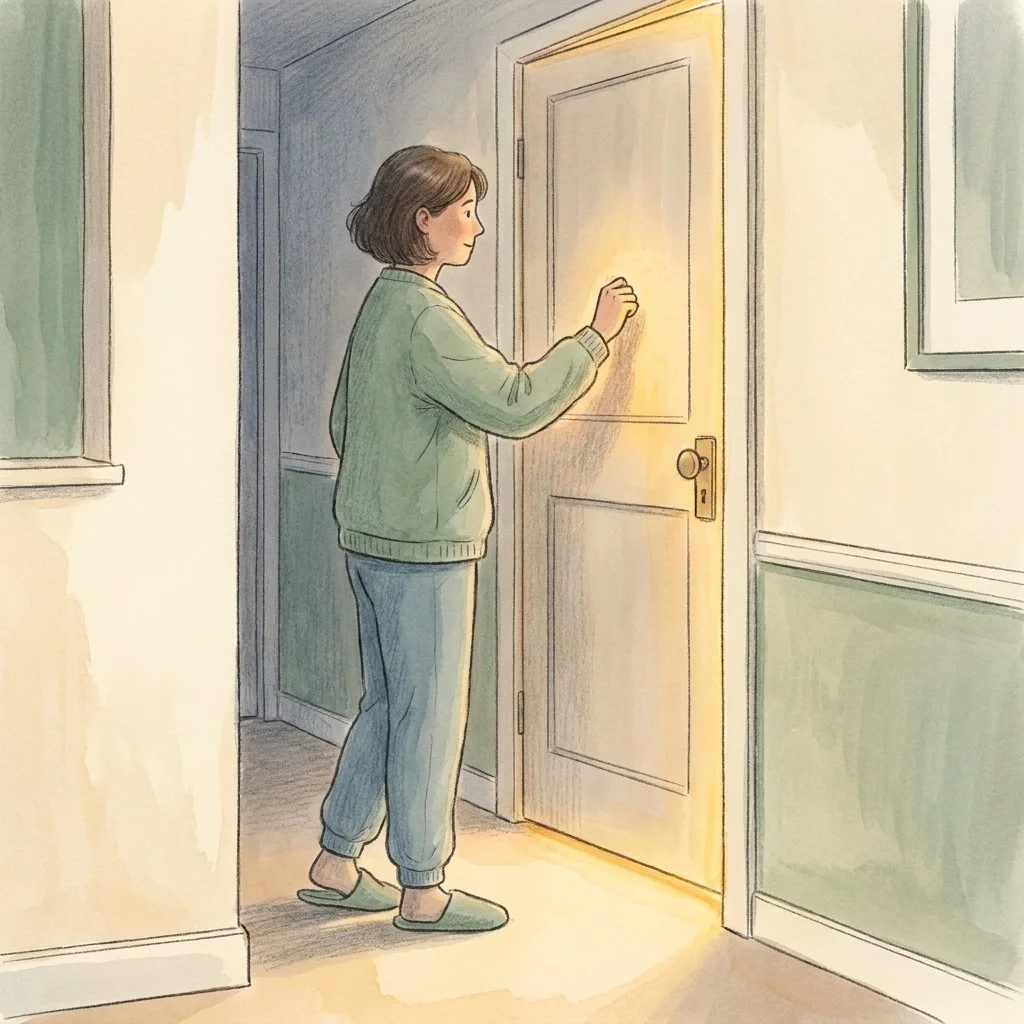
Guilt points at the action. Shame points at the self.
Why the Spiral Makes Repair Harder
Self-punishment can feel productive, but it drains the energy you need to fix this. It also keeps the focus on you when your partner is the person who needs attention.
This is where self-compassion comes in, and it's often mistaken for letting yourself off the hook. The evidence points the other way. In four experiments, Breines and Chen found that self-compassion increased motivation to improve, including, in one study, more motivation to make amends and avoid repeating a moral wrong people had recalled.
In a study of couples, people higher in self-compassion were described by their partners as more affectionate and accepting, and less controlling and verbally aggressive. These are modest studies (short lab experiments, mostly with students, and a correlational couples study), so treat them as promising rather than settled. But the direction is consistent: kindness toward yourself seems to make it easier to face a mistake squarely, not harder. Our piece on self-compassion for anxiety goes deeper on how to practice it.
Try a simple test tonight: speak to yourself as you would to a friend who told you they had done this. You would not tell them it was fine or tell them they were worthless. You would probably say, "That was a bad thing to say. What are you going to do about it?"
How to Apologize After Saying Something Hurtful
An apology is where guilt turns into something useful.
What a real apology contains
In two studies by Lewicki, Polin and Lount, apologies were judged more effective the more of six elements they included: regret, an explanation, acknowledgment of responsibility, repentance, an offer of repair, and a request for forgiveness. Acknowledging responsibility mattered most, and asking for forgiveness mattered least. (The studies used workplace scenarios rather than couples, so treat them as a guide, not a formula.)
In practice, that might sound like this:
- Name exactly what you said. Not "I'm sorry about last night," but "I brought up your dad, after I promised I never would."
- Own it without hedging. "That was cruel, and I don't have an excuse for it."
- Recognize the impact. "I think it made you feel I'd been holding it against you all along."
- Offer a change. "When I feel myself getting that angry, I'm going to ask for a break instead of reaching for the worst thing I can find."
- Then stop talking and listen.
Why "I'm sorry you felt that way" fails
Social psychologist Karina Schumann's research describes how people often offer defensive or perfunctory apologies, partly because admitting fault threatens their image of themselves as a good person. That's the same self-protective pull that shame creates.
"I'm sorry you felt that way" places the problem in their feelings. "I'm sorry, but you also..." starts the argument again. An explanation that is really a justification ("I was exhausted and you kept pushing") cancels the apology that came before it. And disputing what happened ("that's not what I said," "you're overreacting") asks them to doubt their own memory or reaction, which is why apologies like that can feel like gaslighting.
If you explain at all, keep it short and make sure it moves you toward responsibility.
Why Over-Apologizing Makes It Worse
This is worth putting gently, because if you are reading at 1am, you may already be doing it.
At times, an apology is really a request: "I'm so sorry, I'm the worst, do you hate me? Please tell me we're okay." It can feel like remorse. But notice what it requires of your partner: they have to comfort you about the thing you did to them. The person who was hurt ends up managing the guilt of the person who hurt them.
Research on excessive reassurance seeking, largely in the context of depression, suggests that repeatedly seeking reassurance tends to wear on the people being asked, according to a meta-analytic review by Starr and Davila, though the authors caution that much of the evidence relies on self-report. We explore this pattern in more depth in our article on relationship anxiety and reassurance loops.
In practical terms, apologize once, fully and clearly. Then carry your guilt yourself for a while instead of handing it to them.
If They Aren't Ready to Hear It
They may not want to talk tonight, or tomorrow, and that's theirs to decide. Something short like "I know I hurt you. I want to apologize properly whenever you're ready" is enough; then give them room. Pushing for forgiveness on your timeline turns the apology back into something about your relief. If the silence is hard to sit with, see our article on when a partner shuts down.

Say it once, clearly. Then give them room.
Forgiving Yourself Without Letting Yourself Off the Hook
At some point, you need to stop punishing yourself. The question is how.
Researchers Lydia Woodyatt and Michael Wenzel distinguish genuine self-forgiveness from pseudo self-forgiveness: feeling better by deciding it wasn't that bad, or that your partner provoked it. The genuine version runs in order. You accept that what you did was wrong, take responsibility, make amends, and then let go of the self-punishment.
Letting go right away is the pseudo version. But staying trapped in self-punishment does not repair anything either. You do not earn the right to feel okay again by suffering enough. You earn it through repair.
When It Isn't a One-Off
For most people reading this, it was one bad night. But if cruel words have become a pattern, if they're escalating, if you find yourself controlling or isolating your partner, or if they seem frightened of you, that's different and deserves real support, not just a better apology. In the US, the National Domestic Violence Hotline (1-800-799-7233, or text START to 88788, 24/7) is best known for supporting people experiencing abuse, but it also takes calls from people concerned about their own behavior and treats them without judgment. In the UK, the NHS points people who are worried about their own behavior in a relationship to the free Respect Phoneline (0808 802 4040, weekdays).
The Short Version for Tonight
You do not have to fix everything at 1am. Tonight, notice the difference between "I did a bad thing" and "I am a bad person," then put the second one down. Tomorrow, name what you said, own it without a "but," and let them respond in their own time. That is what taking it seriously looks like.
-Tim, Founder of Wellness AI
About the Author
Dr. Timothy Rubin holds a PhD in Psychology with expertise in cognitive science and AI applications in mental health. His research has been published in peer-reviewed psychology and artificial intelligence journals. Dr. Rubin founded Wellness AI to make evidence-based mental health support more accessible through technology.
Talk It Through Before You Talk to Them
Try Wellness AI to sort through what happened, plan what you want to say, and wind down with a personalized meditation when the replay won't stop.


FAQ: Saying Something You Regret in a Fight
How to repair after saying something hurtful to your partner?
Apologize for the specific words rather than for "the fight" in general. Take responsibility without excuses, acknowledge how it landed, and offer a concrete change. Then allow them time to respond.
How to apologize after a heated argument?
Wait until you've both calmed down, then keep it short and specific. Name what you said and own it. Don't use the apology to reopen the disagreement; anything that begins "I'm sorry, but..." usually does.
What is the strongest way to apologize?
In research on what makes apologies work, acknowledging responsibility carried the most weight, followed by offering to repair the damage. Asking for forgiveness mattered least, so focus on what you did and what you'll change rather than on being absolved.
How to repair after hurting your partner?
The apology begins the repair, and what you do afterward carries it. Follow through on the change you promised, do not use that topic as a weapon again, and let them set the pace. Trust tends to rebuild through consistent behavior over time, not in one conversation.
How to say sorry without gaslighting?
Don't dispute what happened or how it landed. Skip "that's not what I said," "you're overreacting" and "I'm sorry you felt that way," which put the problem in their reaction rather than in your words. Name what you actually said and take responsibility for it.
My partner is not talking to me after an argument. What should I do?
If you said the hurtful thing, their silence may simply be hurt, and they're entitled to it. Tell them once that you're sorry and ready to talk when they are, then give them room. Repeated messages usually add pressure rather than repair.
What should I do after an argument with my partner?
Let yourself calm down first, then separate "I did a bad thing" from "I am a bad person." Guilt about what you did can point you toward repair, while self-disgust tends to get in the way. When you're both ready, apologize specifically and then listen.