Self-Compassion for Anxiety: Why Being Kind to Yourself Actually Works
Author: Dr. Timothy Rubin, PhD in Psychology
Originally Published: January 2026
Last Updated: January 2026

Self-compassion—treating yourself with the same kindness you'd offer a friend—is one of the most effective ways to reduce anxiety.
Contents
- The Self-Criticism Trap
- What Is Self-Compassion?
- Self-Compassion vs. Self-Criticism
- What the Research Says
- Why Self-Compassion Works Better Than Self-Esteem
- Does Self-Compassion Make You Lazy?
- How to Be Kinder to Yourself: Practical Exercises
- Getting Started with Self-Compassion
- Frequently Asked Questions
If you struggle with anxiety, you're probably familiar with the voice in your head that criticizes every mistake and predicts the worst possible outcomes. What might surprise you is that many people respond to their anxiety with even more self-criticism—creating a painful cycle that makes everything worse.
Research now shows there's a better way. Self-compassion—the practice of treating yourself with the same kindness you'd offer a good friend—has emerged as one of the most effective approaches for reducing anxiety.
The Self-Criticism Trap
When anxiety strikes, most people instinctively turn on themselves. You might berate yourself for worrying "too much" or criticize yourself for not being able to just "calm down."
This self-attack feels productive—as if being hard on yourself will motivate change. But it doesn't work that way.
Why Self-Criticism Backfires
Psychologist Paul Gilbert, founder of Compassion-Focused Therapy, explains that self-criticism activates the body's threat response—the same fight-or-flight system that fuels anxiety. Instead of calming you down, harsh self-judgment keeps your brain in protection mode.
The cycle: Anxiety leads to self-criticism, which increases stress hormones, which worsens anxiety. Breaking free requires a different approach.
What Is Self-Compassion?
Self-compassion isn't about lowering your standards or feeling sorry for yourself. Psychologist Kristin Neff, who pioneered the scientific study of self-compassion, defines it simply: extending to yourself the same kindness you'd naturally offer to someone you love who is struggling.
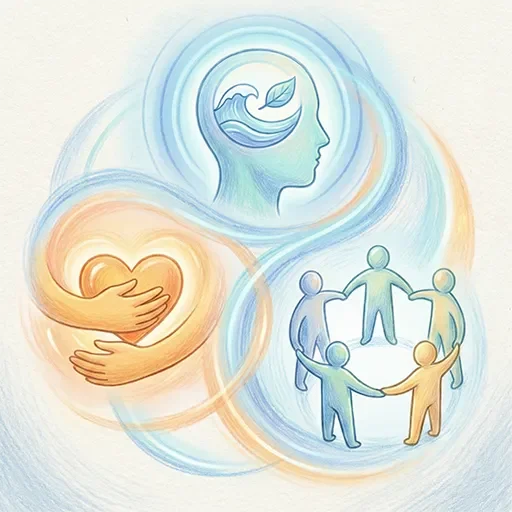
Self-compassion has three core components: self-kindness, common humanity, and mindfulness.
Neff's research identifies three core components that work together:
Self-Kindness
This means treating yourself with warmth rather than harsh judgment when you suffer or feel inadequate. Instead of criticizing yourself, you pause to offer comfort—like you would for a friend going through a hard time.
Common Humanity
This involves recognizing that suffering and imperfection are part of the shared human experience. When anxiety makes you feel isolated, common humanity reminds you that struggle is universal—you're not uniquely broken. This shift from "why me?" to "this is part of being human" reduces isolation.
Mindfulness
This means holding difficult emotions in balanced awareness rather than over-identifying with them. Instead of suppressing anxious feelings or getting swept away, mindfulness allows you to observe: "I notice I'm feeling anxious" rather than "I am anxiety."
Self-Compassion vs. Self-Criticism: A Quick Comparison
| When You Make a Mistake... | Self-Criticism Says | Self-Compassion Says |
|---|---|---|
| Inner voice | "You're such an idiot" | "Everyone makes mistakes sometimes" |
| Focus | What's wrong with you | What you need right now |
| Effect on anxiety | Increases stress response | Activates soothing system |
| Motivation style | Fear of inadequacy | Care for your wellbeing |
| Result | Paralysis or avoidance | Learning and growth |
What the Research Says
The evidence supporting self-compassion for anxiety is substantial. A major research review found a strong relationship between self-compassion and reduced psychological distress—people with higher self-compassion show lower anxiety, depression, and stress.
The Science Behind It
When you practice self-compassion, you activate what Gilbert calls the "soothing system"—the same pathways triggered when we receive care from others. This counteracts the threat response driving anxiety.
Research on the Mindful Self-Compassion program shows participants experience significant reductions in anxiety and depression, along with increased life satisfaction.
Real-World Example
Consider Maya, who struggles with social anxiety. Before an important presentation, her mind floods with criticism: "You're going to freeze up. Everyone will see how nervous you are."
With self-compassion, Maya might instead acknowledge: "This is really hard. Presentations make a lot of people nervous. What do I need right now to feel a little more supported?"
This shift doesn't eliminate nervousness, but it stops the spiral of self-attack that makes anxiety unbearable.
Why Self-Compassion Works Better Than Self-Esteem
How does self-compassion differ from self-esteem, long promoted as the key to psychological health?
The Problem with Self-Esteem
Self-esteem depends on evaluating yourself positively—feeling good about your abilities and how you compare to others. The problem? It rises and falls based on your latest success or failure. When things go wrong, high self-esteem offers little protection.
The Self-Compassion Advantage
Self-compassion doesn't require positive self-evaluation. It simply asks you to be kind to yourself regardless of how you're performing.
In research where participants discussed their greatest weaknesses, self-compassionate individuals experienced less anxiety than those with high self-esteem—they could acknowledge shortcomings without feeling threatened.
Does Self-Compassion Make You Lazy?
The most common objection to self-compassion is fear that being kind to yourself will make you complacent. Many of us were taught that self-criticism drives improvement.
Studies consistently find the opposite. Self-compassionate people are actually more motivated, not less. They're more likely to:
- Take personal initiative to make positive changes
- Acknowledge and learn from their mistakes
- Persist through setbacks
- Take on challenges without fear of failure
Why This Makes Sense
Fear-based self-criticism creates anxiety about failure, which makes people avoid challenges and give up easily. Self-compassion creates psychological safety to take risks and approach goals with curiosity.
Self-compassionate individuals aim just as high as others—they just aren't devastated when they don't reach their goals.
How to Be Kinder to Yourself: Practical Exercises
Building self-compassion is a skill that develops with practice. Here are three evidence-based exercises to try:

Simple daily practices can help build self-compassion over time.
The Self-Compassion Break
This brief practice can be used in any moment of difficulty. When struggling, pause and move through three steps:
Step 1: Acknowledge the difficulty. Say to yourself, "This is a moment of suffering" or simply "This is hard." This is the mindfulness component—naming your experience without pushing it away.
Step 2: Remember common humanity. Say, "Suffering is part of life" or "Other people feel this way too." This counters the isolation that intensifies anxiety.
Step 3: Offer yourself kindness. Say, "May I be kind to myself" or "May I give myself the compassion I need." Some people find it helpful to place a hand over their heart while speaking these words.
Compassionate Letter Writing
Write a letter to yourself from the perspective of an unconditionally loving friend. Describe the situation you're facing, acknowledge your feelings without judgment, and offer the comfort and encouragement this friend would share.
Loving-Kindness Meditation for Self
Loving-kindness meditation begins with directing warm wishes toward yourself. Sit comfortably, bring your own image to mind, and silently repeat:
- "May I be safe."
- "May I be healthy."
- "May I be happy."
- "May I live with ease."
If directing kindness toward yourself feels difficult at first, that's normal. Try thinking of someone who loves you and imagine receiving their warmth before turning it inward.
Getting Started with Self-Compassion
Like any skill, self-compassion strengthens with regular practice. Start small—practice the self-compassion break once daily when you notice anxiety arising.
Combining Approaches
Self-compassion pairs naturally with other evidence-based approaches like MBCT and ACT. Many people find that combining techniques creates the most powerful results.
When It Feels Uncomfortable
If being self-compassionate feels strange at first, that's expected. Many people have practiced self-criticism for years, so a new approach naturally feels awkward. Treat this discomfort with compassion too—with practice, self-compassion becomes more genuine and automatic.
A Note on Professional Support
While self-compassion practices are helpful for many people, they're not a replacement for professional treatment if you're experiencing severe anxiety. If anxiety significantly impacts your daily life, consider working with a therapist.
-Tim, Founder of Wellness AI
About the Author
Dr. Timothy Rubin holds a PhD in Psychology with expertise in cognitive science and AI applications in mental health. His research has been published in peer-reviewed psychology and artificial intelligence journals. Dr. Rubin founded Wellness AI to make evidence-based mental health support more accessible through technology.
Build Your Self-Compassion Practice
Try Wellness AI for guided self-compassion exercises and personalized meditation support.


Frequently Asked Questions
What's the difference between self-compassion and self-pity?
Self-pity involves becoming absorbed in your problems and feeling like you're the only one suffering. Self-compassion recognizes that suffering is universal and responds with kindness rather than isolation.
How long does it take to develop self-compassion?
Most people notice benefits within a few weeks of consistent daily practice. The eight-week Mindful Self-Compassion program shows significant improvements in that timeframe.
Can self-compassion help with social anxiety?
Yes. Self-compassion is particularly helpful for social anxiety because it addresses fear of judgment. When you can offer yourself kindness regardless of how others perceive you, social situations feel less threatening.
Is self-compassion the same as mindfulness?
Mindfulness is one component of self-compassion. Self-compassion adds self-kindness and common humanity—actively caring for yourself and recognizing your shared human condition.
What if being self-compassionate feels fake?
This is very common at first. Many people have practiced self-criticism for years, so self-compassion feels unnatural initially. With practice, it becomes more genuine and automatic.
Will self-compassion make me too easy on myself?
Research consistently shows self-compassion increases motivation and personal responsibility. Self-compassionate people are more likely to acknowledge mistakes, learn from failures, and take action to improve.