Anxious Attachment Triggers and How to Calm Them
Author: Dr. Timothy Rubin, PhD in Psychology
Originally Published: June 2026
Last Updated: June 2026
Anxious attachment is a learned pattern, not a flaw, and it responds to understanding and practice.
Contents
- What Is Anxious Attachment? A Quick Primer
- What Triggers Anxious Attachment?
- What Happens in Your Body and Mind
- How to Calm Anxious Attachment: A Toolkit
- Building Earned Security Over Time
- Support Between the Hard Moments
- The Bottom Line
- Frequently Asked Questions
If a slow reply to your text can hijack your whole afternoon, or the words "I need some space" land like the floor falling away, you are not broken. You are experiencing something psychologists call anxious attachment, and it is far more common than you might think.
Anxious attachment is a learned way of relating to the people we love, shaped largely by early experiences. It is not a character flaw, and it is not a diagnosis. It is a pattern, and patterns can change.
This guide walks through what tends to trigger anxious attachment, what happens in your body and mind when it flares, and a practical toolkit for calming an activated attachment system in the moment while building steadier security over time.
What Is Anxious Attachment? A Quick, Jargon-Free Primer
Attachment theory began with British psychiatrist John Bowlby and grew through researchers who studied how children respond to closeness and separation with their caregivers. The core idea is simple: the way important people responded to us when we were young shapes what we come to expect from relationships as adults.
When a caregiver was sometimes warm and available and other times distant or unpredictable, a child can learn that love is real but unreliable. That early uncertainty can grow into an adult pattern marked by a deep desire for closeness paired with a persistent worry that it might be taken away.
People with an anxious attachment style tend to crave intimacy, tune in closely to a partner's moods, and feel relational threats keenly. Depending on how it is measured, research suggests that somewhere between roughly 1 in 10 and 1 in 5 adults relate this way. If that sounds like you, you are in good company.
It's a Pattern, Not a Flaw
This part matters, so it is worth saying plainly: anxious attachment is something you learned, not something you are. It was a sensible adaptation to an environment where care felt inconsistent.
And because it is learned, it is changeable. Attachment patterns are not fixed for life, and many people gradually shift toward a more secure way of relating. The goal is not to shame the pattern out of existence. It is to understand it and work with it kindly.
What Triggers Anxious Attachment?
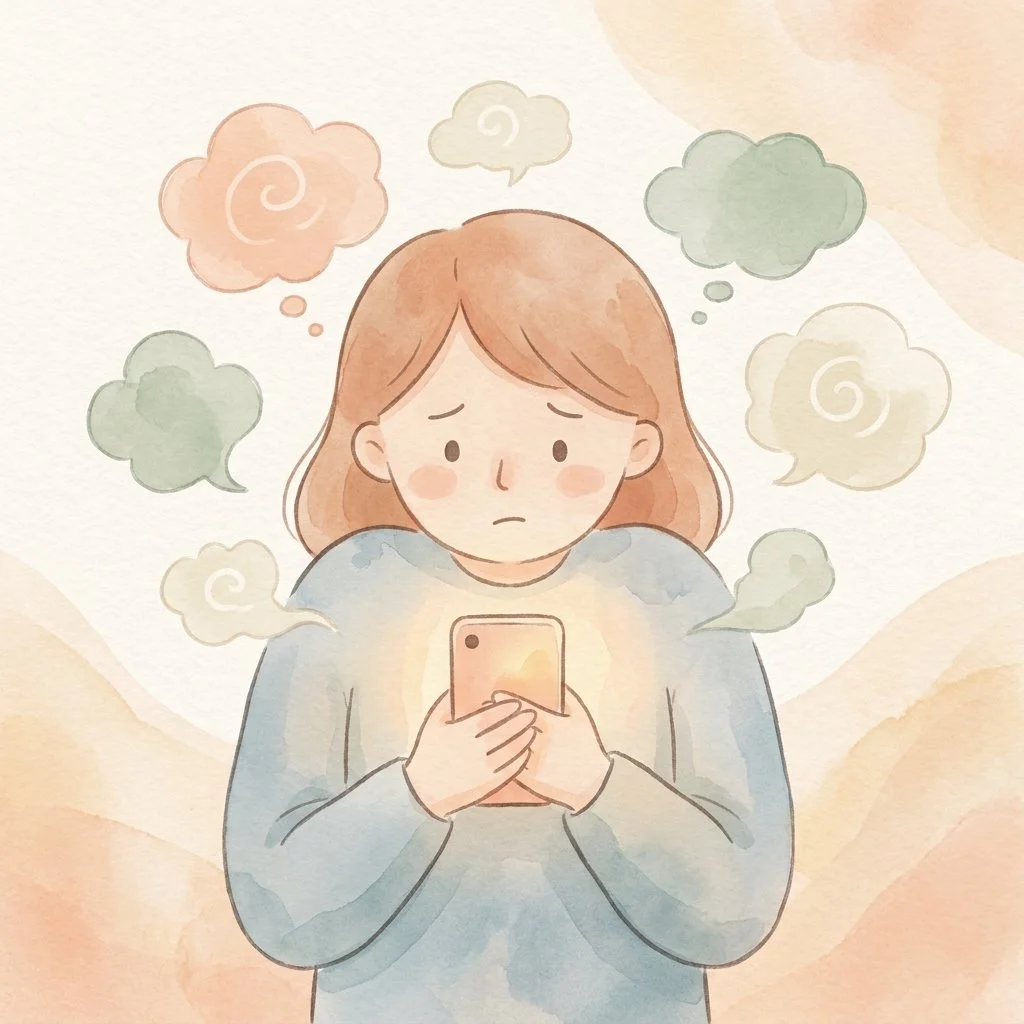
Everyday moments like a delayed reply can read as signals of distance to an anxious attachment system.
An anxious attachment system is exquisitely sensitive to anything that might signal distance or loss. The triggers are usually ordinary moments that an anxious nervous system reads as alarms. Common ones include:
- Perceived distance. A partner seems quieter, more tired, or less affectionate than usual.
- Delayed replies. A text goes unanswered for hours and your mind fills the silence with worst-case stories. We unpack this specific spiral in our guide to texting anxiety and anxious attachment.
- Inconsistency or mixed signals. Warm one day, hard to reach the next.
- Conflict. Even minor disagreements can feel like the relationship itself is in danger.
- Plans changing. A canceled date or a shift in routine can read as rejection.
- A partner needing space. A bid for normal, healthy autonomy can feel like the start of abandonment.
A securely attached person might shrug off a late reply with "they're busy." For an anxiously attached person, the same event can set off a cascade of worry. The trigger itself is rarely the real problem. What matters is how loudly the alarm rings.
Signs Your Attachment System Is "Activated"
You might notice your anxious attachment getting activated through a sudden urge to over-check your phone, a tight or sick feeling in your stomach, racing thoughts about what you did wrong, or a strong pull to seek reassurance right now. Some people describe this as spiraling, where one anxious thought feeds the next until calm feels out of reach. Recognizing these early signs is the first step to interrupting them.
What Happens in Your Body and Mind When You're Triggered
When your attachment system senses a threat to an important connection, it can switch on the body's stress response. Your heart rate climbs, your muscles tense, and stress hormones rise, drawing on the same machinery that helps you handle any kind of danger.
Brain-imaging research suggests that people higher in attachment anxiety react more strongly to signs of social threat, like a disapproving face. In other words, the alarm system is real, and for some of us it is set to a hair trigger. This is why "just calm down" rarely works on its own. Your body has already decided there is an emergency.
The Protest Response
When the system fires, it tends to push us toward what psychologists call hyperactivating strategies, which means turning up the volume on our efforts to restore closeness. This often shows up as protest behavior: sending a flurry of texts, picking a fight to get a reaction, going silent to see if they will chase you, or quietly keeping score.
It helps to see these behaviors for what they are, which is a distressed nervous system trying to re-establish a sense of safety. They make complete sense. They are simply rarely the strategy that gets us the connection we actually want. If you find yourself caught in cycles of seeking reassurance, our piece on reassurance loops in relationship anxiety goes deeper.
How to Calm Anxious Attachment: An In-the-Moment Toolkit
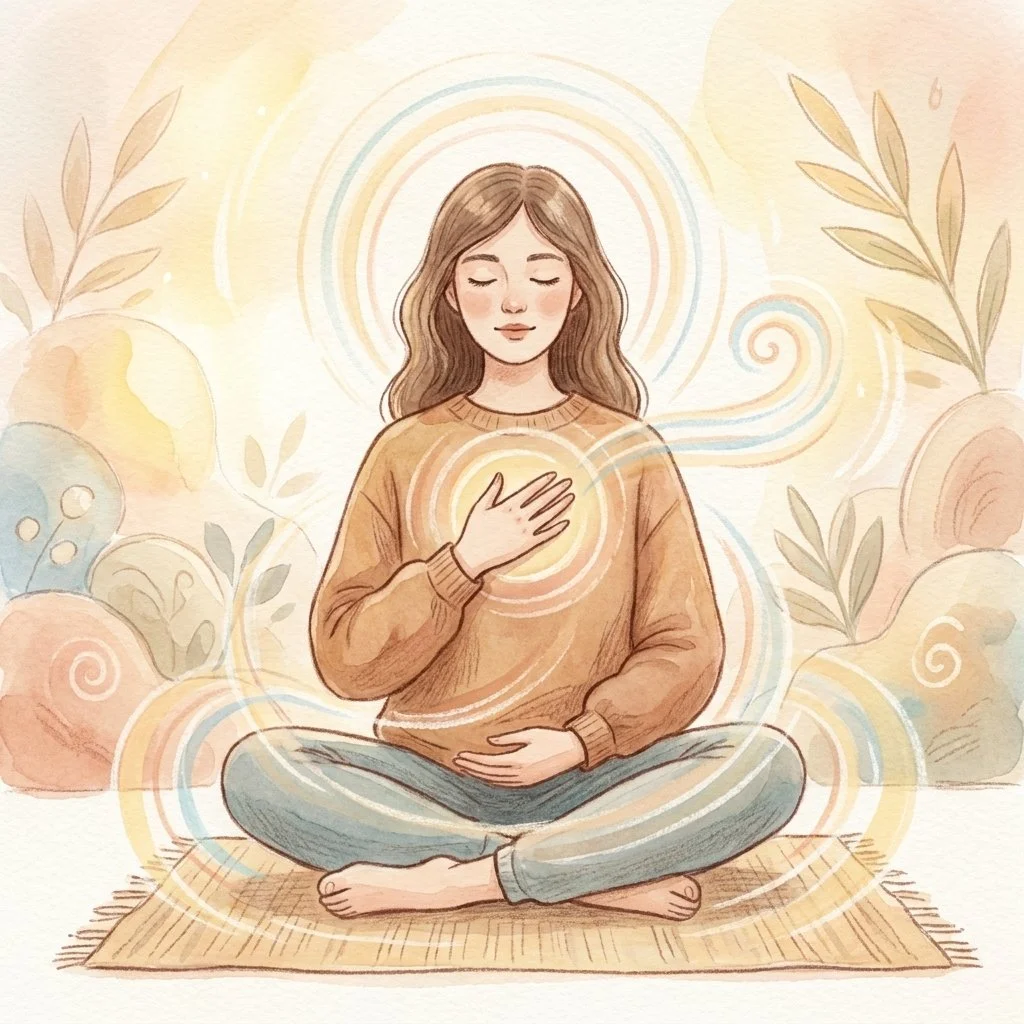
A few evidence-based skills can soothe the body and quiet the alarm when you feel triggered.
You cannot always stop a trigger from landing, but you can learn to soothe the response. Here is a sequence of evidence-based skills to try when you feel activated. You do not need all five at once. Even one can take the edge off.
1. Name What You're Feeling
The simplest place to start is to put words to the experience: "I'm feeling anxious, and I'm scared of being left." It sounds almost too easy, but research suggests naming an emotion helps quiet the brain's alarm response. Labeling the feeling shifts you from being swept up in it to observing it, which creates a little breathing room.
2. Soothe Your Body First
Because activation is physical, calming your body can be more effective than arguing with your thoughts. Slow breathing is one of the most reliable tools, since research suggests that lengthening your exhale nudges your nervous system toward calm.
Try a few rounds of breathing in for a count of four and out for a count of six. Grounding techniques, gentle movement, or simply placing a hand on your chest can help too. Our guide to somatic exercises for anxiety has more options worth keeping on hand.
3. Unhook From the Story
Anxious activation arrives with a gripping story: they're pulling away, this is the end. A skill from Acceptance and Commitment Therapy, a well-researched approach, is to step back from the thought rather than treat it as fact.
Try adding a short preface: "I'm having the thought that they're leaving me." That small shift reminds you a thought is a mental event, not a verdict. You can notice it, thank your mind for trying to protect you, and choose not to act on it right away.
4. Do the Opposite of the Urge
When an emotion is intense but does not fit the facts, Dialectical Behavior Therapy offers a skill called opposite action, which means deliberately doing the opposite of what the urge demands.
If the urge is to send fifteen messages, send one calm one, or none for now. If the urge is to withdraw and punish, reach out warmly instead. You are not suppressing the feeling. You are choosing not to let a false alarm run the show.
5. Ask for What You Need
Protest behaviors are indirect attempts to get a need met. The steadier path is to name the need directly. Instead of testing or withdrawing, you might say, "I'm feeling a little anxious, and some reassurance would really help right now."
Clear, kind requests tend to bring partners closer, while protest behavior often pushes them away. This is a skill rather than a personality trait, and it gets easier with practice.
Building Earned Security Over Time
In-the-moment tools help you weather a storm. The longer game is gradually teaching your nervous system that connection can be safe and reliable. Researchers call the result earned security, and it is one of the most hopeful findings in this whole field.
Attachment patterns can shift across the lifespan through steady, supportive relationships and good therapy. Each time you stay present through a wave of anxiety instead of acting it out, you lay down a slightly new pattern. Interestingly, studies suggest that even briefly bringing to mind someone who makes you feel safe can calm the threat response, a small practice you can use anytime.
Self-Compassion: Reassurance From the Inside
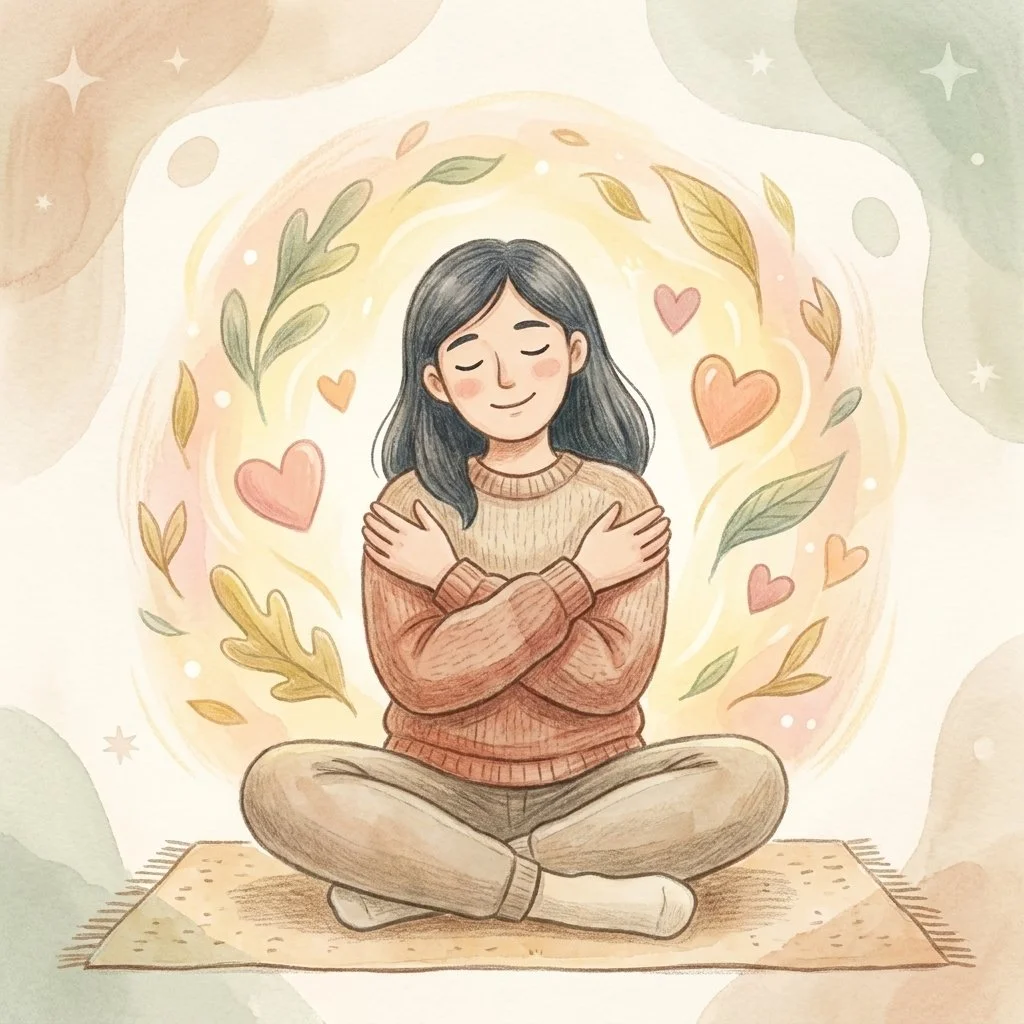
Self-compassion offers a steady, internal source of reassurance that does not depend on others.
Anxious attachment often runs on external reassurance: if they tell me it's okay, then I can relax. Self-compassion offers a second, more reliable source, which is you.
Research suggests that treating yourself with kindness helps buffer anxiety, and that people who are gentler with themselves tend to feel less attachment anxiety. When you are triggered, try speaking to yourself the way you would speak to a frightened friend. Our guide to self-compassion for anxiety offers practical ways to build this skill.
Support Between the Hard Moments
Triggers rarely wait politely for your next therapy appointment. A lot of the real change happens in the spaces between sessions, and a few tools can help you ride out an activated moment.
Mindfulness and meditation practices have been shown to ease anxiety, and a short guided session can help settle an activated system. Research on mental-health apps also suggests they can offer modest but real support for managing anxiety in everyday life.
Options range from meditation apps to AI-based check-ins you can reach for the moment you feel activated. Wellness AI is one such tool, offering in-the-moment chat support and personalized guided meditations, and our guide to AI therapy for relationship anxiety explores how this kind of support can fit alongside other care. Tools like these work best as a supplement to real relationships and professional help, not a replacement for them.
The Bottom Line
Anxious attachment is a learned pattern rather than a flaw, and it responds well to understanding and practice. Triggers like distance, delay, and conflict can set off a very real stress response, but you can learn to name it, soothe your body, unhook from the story, and ask for what you need.
Over time, those small choices add up to something steadier. Be patient with yourself along the way, because you are gradually rewiring something that took years to form, and every calm response counts.
-Tim, Founder of Wellness AI
About the Author
Dr. Timothy Rubin holds a PhD in Psychology with expertise in cognitive science and AI applications in mental health. His research has been published in peer-reviewed psychology and artificial intelligence journals. Dr. Rubin founded Wellness AI to make evidence-based mental health support more accessible through technology.
Calm an Activated Attachment System
Try Wellness AI for in-the-moment chat support and personalized guided meditations to help you ride out anxious moments.


Frequently Asked Questions
What triggers anxious attachment?
Common triggers include perceived distance, delayed replies, inconsistency, conflict, changed plans, and a partner needing space. These ordinary moments can read as signs of rejection to an anxious attachment system, which sets off a stress response.
How do I calm my anxious attachment in the moment?
Start by naming the feeling, then soothe your body with slow breathing before you react. From there you can step back from the anxious story and, if needed, ask for reassurance directly rather than acting on the urge to protest or withdraw.
Is anxious attachment a mental illness?
No. It is a learned relationship pattern described by attachment theory, not a clinical diagnosis. It can be uncomfortable, but it is common and changeable.
Can anxious attachment be changed?
Yes. Research suggests attachment patterns can shift toward security across the lifespan through supportive relationships, therapy, and consistent self-work, an outcome researchers call earned security.
Why does a late text make me so anxious?
For an anxious attachment system, silence can feel like a threat to the connection, which switches on the body's stress response. The reaction is fast and physical, which is why it can feel out of proportion to the event.
What is protest behavior in anxious attachment?
Protest behavior refers to indirect attempts to restore closeness when you feel threatened, such as over-texting, picking fights, or withdrawing to provoke a response. It reflects a distressed nervous system seeking safety, and it can be replaced with more direct communication.
Does self-compassion help with attachment anxiety?
Research suggests that people who treat themselves with kindness tend to experience less anxiety, including attachment anxiety. Self-compassion offers an internal source of reassurance, reducing reliance on constant validation from others.
When should I talk to a professional?
Consider reaching out to a mental-health professional if anxiety feels unmanageable, interferes with daily life, or connects to deeper trauma. Therapy can provide personalized support and a safe relationship in which to build lasting security.