DBT for Anxiety: Dialectical Behavior Therapy Skills for Daily Life
Author: Dr. Timothy Rubin, PhD in Psychology
Originally Published: February 2026
Last Updated: February 2026
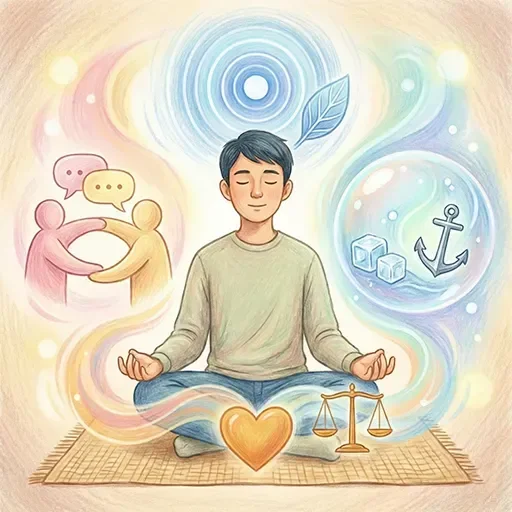
DBT teaches practical skills to manage intense emotions—building your "emotional resilience" toolbox for daily life.
Contents
- What is DBT and Why Does It Help Anxiety?
- DBT Skills at a Glance
- Mindfulness: Staying Present to Reduce Worry
- Distress Tolerance: Riding Out the Storm
- Emotion Regulation: Managing Intense Feelings
- Interpersonal Effectiveness: Navigating Relationships
- Using DBT Skills Daily: Apps and Strategies
- FAQ: DBT for Anxiety
Dialectical Behavior Therapy (DBT) is an evidence-based psychotherapy that teaches practical skills for coping with intense emotions and stress. While originally developed for borderline personality disorder, DBT's techniques are now widely used for anxiety, depression, PTSD, and other conditions.
If you struggle with overwhelming worry or emotional distress, DBT offers something powerful: a concrete toolkit for managing feelings in real-time. In this guide, we'll explore the four core DBT skill areas and how to practice them in everyday life.
Curious how DBT compares to traditional Cognitive Behavioral Therapy? See our detailed CBT vs DBT comparison.
What is DBT and Why Does It Help Anxiety?
DBT was pioneered by psychologist Marsha Linehan in the 1980s. "Dialectical" means finding balance between opposites—in DBT, that's balancing acceptance and change. A DBT approach validates your feelings while helping you develop new, healthier responses.
Why does a therapy for intense emotional dysregulation help everyday anxiety? The answer lies in the skills. DBT builds coping abilities in four areas: mindfulness, distress tolerance, emotion regulation, and interpersonal effectiveness. These directly target what anxious people struggle with—racing thoughts, overwhelming worry, panic symptoms, and difficulty with conflict.
DBT teaches you to control intense emotions and survive crisis moments without making things worse. Research suggests DBT's skill-based approach can benefit people with generalized anxiety disorder and other conditions involving emotion dysregulation.
DBT Skills at a Glance
Here's a quick overview of the four DBT skill modules and how each helps with anxiety:
| Skill Module | What It Does | Helps With |
|---|---|---|
| Mindfulness | Anchors you in the present moment | Racing thoughts, rumination, worry spirals |
| Distress Tolerance | Helps you survive crisis moments | Panic attacks, overwhelming emotions |
| Emotion Regulation | Manages emotional patterns proactively | Mood swings, emotional reactivity |
| Interpersonal Effectiveness | Improves communication under stress | Social anxiety, conflict avoidance |
Mindfulness: Staying Present to Reduce Worry
Mindfulness is the foundation of all DBT skills. It means being fully aware of the present moment with openness and non-judgment.
Anxiety pulls us into ruminating about the past or worrying about the future. Mindfulness trains your mind to come back to right here and now, breaking the anxious thought cycle.
Try This: Grounding in Your Senses
When anxiety surges, try the 5-4-3-2-1 technique: name 5 things you see, 4 you can touch, 3 you hear, 2 you smell, and 1 you taste. This anchors your attention to sensory reality instead of internal worry. For more grounding exercises, see our panic attack grounding guide.
Even a one-minute mindful breathing break—focusing only on air moving in and out—can calm the body's fight-or-flight response. These small exercises are genuine "brain training" for a calmer mind.

Brief mindfulness exercises throughout the day can interrupt anxiety spirals before they escalate.
Distress Tolerance: Riding Out the Storm
Distress tolerance skills are crisis survival strategies—ways to get through intense distress without making things worse. You may not eliminate a wave of anxiety in the moment, but you can learn to ride it out safely.
These skills help you cope without harmful actions like avoiding everything, exploding in anger, or numbing with substances.
The TIPP Technique for Acute Panic
When anxiety peaks, TIPP can help quickly:
- Temperature: Hold ice or splash cold water on your face—this can slow your heart rate and interrupt panic
- Intense exercise: Do 30 seconds of jumping jacks or sprinting to burn off adrenaline
- Paced breathing: Slow breaths, exhaling longer than inhaling (try 4 seconds in, 6 seconds out)
- Progressive relaxation: Tense and release muscle groups to discharge physical tension
For deeper relaxation techniques, explore our guide on body scan meditation.
The ACCEPTS Skill for Distraction
ACCEPTS helps you distract and soothe yourself during difficult moments:
- Activities – Go for a walk, do a puzzle
- Contributing – Do something kind for someone
- Comparisons – Remind yourself of challenges you've overcome
- Emotions – Watch something funny to shift your emotional state
- Pushing away – Mentally set aside the problem temporarily
- Thoughts – Occupy your mind with counting or word games
- Sensations – Use strong sensations (ice, sour candy) to ground yourself
Over time, distress tolerance skills build confidence. You learn that intense feelings pass—and that you can survive them without falling apart.
Emotion Regulation: Managing Intense Feelings
Emotion regulation is about understanding and managing your emotional patterns proactively. Rather than being controlled by emotions, you become more aware of them and gain more control over your reactions.
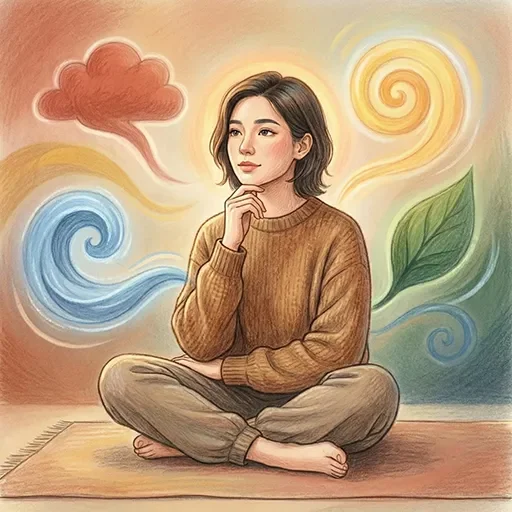
Emotion regulation means becoming curious about your feelings rather than overwhelmed by them.
Check the Facts
When anxiety spikes, pause and ask: What event triggered this? Are my thoughts about it completely factual, or could I be misinterpreting?
Anxiety often comes with catastrophic thinking ("My boss frowned—I must be getting fired!"). Checking facts encourages you to examine evidence. Maybe your boss was just having a bad day. By aligning thoughts with facts, you can defuse unnecessary anxiety. For more on this technique, see our cognitive restructuring guide.
Opposite Action
This means doing the opposite of what your anxious urge tells you. If anxiety makes you want to avoid a social event, the opposite action is to gently approach and attend, even briefly.
Over time, opposite action weakens anxiety's grip—you teach your brain a new response by doing the opposite of the fear-based impulse.
PLEASE Skills for Vulnerability
Your emotional stability depends heavily on physical basics:
- Treat Physical iLlness
- Balance Eating
- Avoid mood-Altering substances
- Balance Sleep
- Get Exercise
If you're running on three hours of sleep and haven't eaten, anxiety is far more likely to flare. Consistent self-care dramatically improves your baseline emotional state.
Interpersonal Effectiveness: Navigating Relationships
Anxiety affects how we interact with others. You might avoid expressing feelings, struggle to say no, or worry excessively about others' opinions. DBT's interpersonal effectiveness skills help you communicate clearly even when emotions run high.
DEAR MAN for Assertive Communication
Use this framework when you need to ask for something or set a boundary:
- Describe the situation factually
- Express how you feel
- Assert what you need
- Reinforce why it benefits them too
- Mindful – stay focused, don't get sidetracked
- Appear confident (even if anxious inside)
- Negotiate – be willing to compromise
Having a formula makes difficult conversations feel less scary. Many people find that practicing interpersonal effectiveness reduces their overall anxiety—they no longer dread interactions because they have tools to navigate them.
Using DBT Skills Daily: Apps and Strategies
Knowing DBT skills in theory is different from using them when anxiety hits. Modern technology can bridge that gap.
Mobile apps make excellent "pocket coaches" for DBT practice. Research shows that apps can help people implement DBT strategies in real-world situations. Some apps include DBT diary cards for tracking emotions, libraries of skills to reference in crisis moments, and guided exercises for each module.
General wellness apps can complement your practice too. Mindfulness meditation apps strengthen the mindfulness foundation. Breathing coaches guide paced breathing exercises. Mood trackers increase awareness of emotional patterns over time.

Having DBT tools on your phone means support is always within reach—even at 2 AM when anxiety strikes.
Apps like Wellness AI use artificial intelligence to personalize support—checking in on how you're feeling and suggesting relevant coping skills in the moment. While these tools aren't replacements for therapy, they can reinforce your independent practice and provide comfort when professional support isn't available.
Building the Habit
The more you practice DBT skills during small stresses, the more prepared you'll be for bigger waves of anxiety. Try integrating mini-exercises into routines:
- Do a 3-minute mindfulness check-in with your morning coffee
- Use opposite action on one avoided task each week
- Practice asserting a small preference daily
Over time, these habits become automatic. Instead of anxiety running the show, your wise mind—DBT's term for that balanced, centered state—steps in calmly with the right skill for the moment.
-Tim, Founder of Wellness AI
About the Author
Dr. Timothy Rubin holds a PhD in Psychology with expertise in cognitive science and AI applications in mental health. His research has been published in peer-reviewed psychology and artificial intelligence journals. Dr. Rubin founded Wellness AI to make evidence-based mental health support more accessible through technology.
Practice DBT Skills On-the-Go
Try Wellness AI for guided mindfulness, distress tolerance techniques, and personalized mental health support.


FAQ: DBT for Anxiety
Is DBT only for borderline personality disorder?
No. While DBT was originally developed for BPD, it's now widely used for anxiety, depression, PTSD, eating disorders, and other conditions involving emotional dysregulation.
How is DBT different from CBT for anxiety?
CBT mainly focuses on changing distorted thoughts. DBT includes that plus acceptance, mindfulness, and concrete coping skills for the physical and emotional waves of anxiety—not just the thoughts. See our full comparison.
Can I learn DBT skills on my own?
Yes, many DBT techniques can be self-taught through books, apps, and online resources. For severe anxiety or complex issues, working with a trained DBT therapist is recommended.
What's a quick DBT technique for panic?
Try TIPP: splash cold water on your face, do brief intense exercise, then slow your breathing. These engage your body's calming reflexes quickly.
How long does it take to see results?
Some skills provide immediate relief. Deeper changes—like significantly reduced overall anxiety—typically develop over weeks to months of consistent practice.
Are there apps specifically for DBT?
Yes. DBT diary card apps help you track emotions daily. Other apps offer skill libraries, guided exercises, and AI-powered coaching. Research shows these can improve how often people use DBT skills in daily life.