Author: Dr. Timothy Rubin, PhD in Psychology
Published: February 2025

A few intentional morning habits can transform how you feel for the rest of the day.
Contents
- 1. Embrace Morning Light
- 2. Practice Mindful Breathing or Meditation
- 3. Write in a Morning Journal
- 4. Move Your Body
- 5. Set a Purposeful Intention
- Using Digital Tools to Support Your Routine
- FAQ
Mornings can be tough—whether you wake up anxious about the day ahead or groggy and unmotivated. The good news is that a simple morning routine for mental health can set a calm, positive tone for everything that follows.
This isn't about a perfect Instagram-worthy ritual. It's about small, science-backed habits that support your mental wellness. Below are five morning practices—rooted in mindfulness, CBT, and positive psychology—that can help anyone start the day right.
1. Embrace Morning Light
One of the simplest yet most powerful habits is to soak up natural morning light. Sunlight in the morning helps reset your circadian rhythm—your body's internal clock—which supports better sleep at night and a brighter mood during the day.
Research published in Nature Mental Health found that people who get more daylight exposure have lower rates of depression and report greater well-being. Morning light signals your brain to halt melatonin and boost cortisol to healthy daytime levels, increasing alertness and energy.
How to Practice
After waking up, open your curtains right away. If possible, step outside for a few minutes—even a short walk with your morning coffee works. On dark winter mornings, a light therapy lamp can provide similar benefits.
As you stand by the window or stroll outdoors, take a few slow breaths and notice the world waking up around you. This small ritual lifts your energy and can become a mindful moment of calm.
2. Practice Mindful Breathing or Meditation
A short morning meditation or mindful breathing practice doesn't require any experience—just a few minutes of focused breathing can center you. Research suggests that mindfulness meditation produces small-to-moderate reductions in anxiety and depression, often on par with other first-line treatments.
Mindfulness teaches decentering—learning to observe thoughts without getting entangled in them. If an anxious thought about your to-do list pops up during morning meditation, you notice it and gently return attention to your breath. You start the day as an observer of your mind, not a hostage to racing thoughts.
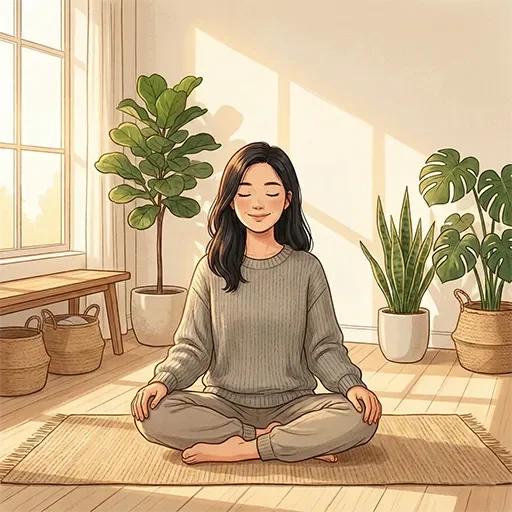
Even 3-5 minutes of morning meditation can train your brain to find calm amid daily chaos.
How to Practice
Find a comfortable spot—sitting up in bed or on a chair works fine. Close your eyes and take slow breaths. Try counting (inhale for 4, exhale for 6) or silently repeat "inhale… exhale."
If your mind wanders, that's okay—simply note "I'm thinking" and bring focus back to breathing. Set a timer for 3-5 minutes to start. Over time, you can extend to 10-15 minutes, but even short sessions help. For more techniques, see our Meditation for Anxiety guide.
3. Write in a Morning Journal
Putting pen to paper for a few minutes each morning can be surprisingly therapeutic. Journaling helps clear mental clutter and creates a sense of control. Research on expressive writing shows that journaling can reduce psychological distress and improve well-being.
Writing creates psychological distance from your thoughts. Seeing a worry written down—"I feel like I won't get anything done today"—transforms it from an overwhelming feeling into words on a page. You can then respond with a more balanced perspective: "I have a lot to do, but I can tackle one thing at a time."
How to Practice
Your morning journal doesn't have to be lengthy. Try jotting down a few sentences about how you feel, listing 3 things you're grateful for, or writing a brief intention for the day.
Some people prefer free-writing "morning pages" to clear mental static. Others like prompted journaling—answering questions like "What's one thing I look forward to today?" Keep your journal by your bedside and make it a judgment-free zone.
4. Move Your Body
We often hear "exercise is good for you," and that's true for mental health as much as physical health. Incorporating some movement in the morning—whether light stretching, yoga, or a brisk walk—has an immediate mood-boosting effect.
Physical activity triggers the release of endorphins and serotonin, brain chemicals that enhance mood and reduce anxiety. The American Psychological Association notes that exercise can be as effective as medication for mild depression and anxiety in some cases.
How to Practice
Keep it simple and enjoyable. Not a runner? Try 10 minutes of yoga or stretching—there are many quick routines online. Even dancing to an upbeat song while you get dressed counts!
The goal is to get your blood flowing. As you move, pay attention to bodily sensations—the feeling of your feet on the ground, the stretch in your muscles. This doubles as a mindfulness practice. For more on building healthy daily habits, see our guide on Daily Habits to Reduce Anxiety.
5. Set a Purposeful Intention
Consider ending your routine by setting a daily intention—a brief moment to connect with what matters most to you. This habit is inspired by Acceptance and Commitment Therapy (ACT): starting your day with values-based action in mind.
An intention isn't a to-do list item; it's a guiding principle. If kindness is a core value, your intention might be "Today, I will practice kindness—to myself and others." Research shows that reflecting on personal values can lower cortisol stress responses and improve well-being.

Setting a values-based intention gives your day direction and buffers against stress.
How to Practice
This can be done in under a minute. After your other habits (or while sipping coffee), pause to think: "What quality do I want to bring into today?" See what comes up—patience, courage, creativity, gratitude, connection.
Choose one and silently set an intention. You can phrase it as "I am…" or "I will…" or a short mantra like "Be present" or "Stay curious." When challenges arise during the day, recalling your intention can help re-center your mindset.
Using Digital Tools to Support Your Routine
You don't have to do this alone—digital tools can be great allies. Mindfulness apps can lead you through 5-minute guided sessions perfect for busy mornings. Digital journaling or mood-tracking apps work well if you prefer typing over writing.
AI-powered mental health tools are also emerging that provide on-demand support. Recent research from Dartmouth showed promising results from AI therapy chatbots, with users experiencing significant decreases in anxiety and depression. While these aren't replacements for professional care, they can supplement your routine—for example, guiding you through a quick CBT exercise when anxious thoughts strike.
If you use technology, use it intentionally. There's a big difference between using a meditation app for 10 minutes versus doom-scrolling news first thing. Consider putting your phone on do-not-disturb except for wellness apps to protect your morning calm.
By combining personal habits with smart use of tools, you'll have a well-rounded approach to mental wellness each morning. Over time, these small steps can lead to big improvements in how you feel throughout the day.
-Tim, Founder of Wellness AI
About the Author
Dr. Timothy Rubin holds a PhD in Psychology with expertise in cognitive science and AI applications in mental health. His research has been published in peer-reviewed psychology and artificial intelligence journals. Dr. Rubin founded Wellness AI to make evidence-based mental health support more accessible through technology.
Start Your Morning Wellness Routine
Try Wellness AI for guided meditations and CBT-based support to start each day calm.


FAQ: Building Your Morning Wellness Routine
How long should a morning mental wellness routine take?
Even 5-10 minutes is effective. Start with what feels realistic and expand once it becomes habit. Quality of attention matters more than duration.
What if I'm not a morning person?
You don't need to wake at 5 AM. Focus on making whatever time you do wake up more intentional—even waking 10 minutes earlier can help establish a calming routine.
Do I have to do all five habits every day?
No—pick one or two that resonate most. Something is always better than nothing. Avoid all-or-nothing thinking about your routine.
What if I skip a day or fall off the routine?
Be kind to yourself and just pick it back up tomorrow. Consistency over the long run matters more than perfection in the short run.
How long until I see results?
Some benefits are immediate (post-meditation calm, energy after exercise). Cumulative improvements in mood and anxiety typically emerge after 4-8 weeks of consistent practice.
Is it okay to use my phone in the morning?
Using apps mindfully for meditation or music is fine. Avoid reactive activities like news and social media until after your wellness habits.