Digital Detox 101: How to Stop Doomscrolling and Reclaim Your Focus
Author: Dr. Timothy Rubin, PhD in Psychology
Originally Published: November 2025
Last Updated: November 2025

Breaking the doomscrolling cycle requires understanding why your brain gets trapped—and learning evidence-based strategies to reclaim your focus.
Contents
- What Is Doomscrolling (and Why Is It So Addictive)?
- Why Doomscrolling Hurts Your Mental Health
- Mindfulness Techniques to Break the Doomscrolling Cycle
- Environmental Design: Make Doomscrolling Harder
- Building Better Digital Habits with If-Then Planning
- When and How to Do a Digital Detox
- FAQ: Digital Detox and Doomscrolling
If you've ever picked up your phone for a quick news check, only to realize an hour has vanished into a haze of negative headlines, you're experiencing doomscrolling. This compulsive habit has become a widespread trap in our always-online lives, fueling anxiety while keeping you unable to look away.
The good news? Breaking the cycle doesn't require superhuman willpower. In this guide, you'll discover evidence-based strategies to stop doomscrolling, reduce phone addiction, and reclaim your mental wellbeing—from mindfulness techniques to smart digital detox plans that actually work.
What Is Doomscrolling (and Why Is It So Addictive)?
Doomscrolling is the compulsive consumption of negative online content, whether it's distressing news or anxiety-inducing social media updates. The term exploded in popularity during the COVID-19 pandemic, but the behavior has only intensified since then.
Why do we keep scrolling even when it makes us feel worse? Three powerful forces work together to trap your brain:
Dopamine Loops Keep You Hooked
Your brain's reward system is hijacked by endless feeds. Apps exploit your natural drive for novelty by providing infinite new content. Each new post triggers a small dopamine release, reinforcing the scrolling habit even when the content upsets you.
This creates what addiction researchers call behavioral addiction. The act of scrolling itself becomes rewarding, separate from whether the content is enjoyable. Your brain learns: keep scrolling, get rewarded. It's the same mechanism that makes slot machines so addictive.
Negativity Bias Amplifies the Effect
Humans naturally pay more attention to threats than positive information—an evolutionary trait that once helped us survive. In the digital age, this negativity bias works against us.
Bad news activates your amygdala, the brain's alarm system, more quickly and intensely than positive content. This triggers stress responses and creates hypervigilance—you start scanning for threats compulsively. Ironically, you scroll to reduce anxiety by seeking certainty, but instead encounter more distressing news. Research confirms this creates a self-perpetuating cycle: the more worried you are, the more you feel compelled to keep scrolling.
FOMO and the Illusion of Control
Fear of missing out keeps you checking constantly. During uncertain times, staying glued to news feeds provides a temporary illusion of control—as if being informed will protect you from danger. Studies show doomscrolling is strongly linked with fear of missing out, creating additional psychological pressure to stay connected.
The combination of reward-seeking behavior, threat detection, and fear creates a perfect storm. No wonder researchers have found that doomscrolling shares characteristics with other behavioral addictions.
Why Doomscrolling Hurts Your Mental Health
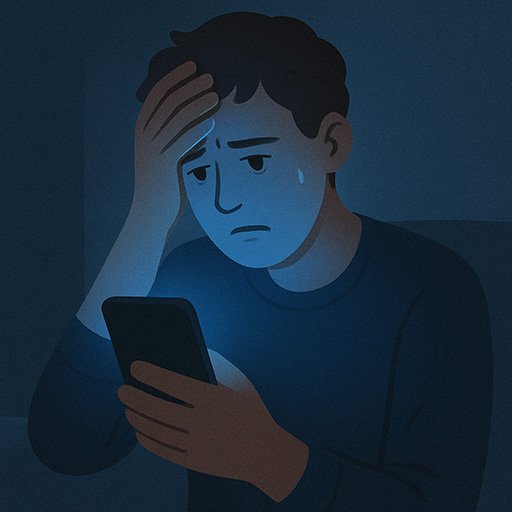
Excessive scrolling through negative content takes a measurable toll on both mental and physical health.
The mental health consequences of doomscrolling are well-documented. Harvard researchers found significant links between excessive negative news consumption and various health problems:
Heightened Anxiety and Depression
Constant exposure to distressing news can trigger anxiety spikes or even panic attacks, especially in those already prone to anxiety. Multiple studies confirm that doomscrolling reinforces negative thought patterns and increases symptoms of depression and anxiety.
A 2023 research review found that higher levels of doomscrolling correlate with worse wellbeing and lower life satisfaction across approximately 1,200 people studied. The more time you spend consuming bad news, the worse you tend to feel about life.
Chronic Stress Response
Scrolling through endless negative content keeps your body's stress response in overdrive. Your nervous system stays in "fight or flight" mode as each headline signals another potential threat. This chronic activation leads to elevated cortisol levels, leaving you feeling jittery, exhausted, or constantly on edge.
Sleep Disruption

Phone usage at night before bed is particularly harmful to sleep and mental health.
Late-night doomscrolling is particularly harmful. Blue light from screens suppresses melatonin for twice as long as other light wavelengths, shifting your circadian rhythm by up to 3 hours. The combination of blue light exposure and mental stimulation from distressing content makes it nearly impossible to get restful sleep.
Many doomscrollers report insomnia or poor sleep quality, which then amplifies anxiety the next day—creating yet another vicious cycle.
"Popcorn Brain" and Attention Problems
Harvard researchers use the term "popcorn brain" to describe the overstimulated feeling from too much screen time. After marathon scrolling sessions, real life feels slow or dull. Your brain becomes conditioned to rapid-fire information, making it harder to focus on anything that requires sustained attention.
One study found that employees who doomscroll at work become less engaged and productive, as their attention capacity gets depleted by the constant digital stimulation.
None of this means you should never read news or use your phone. The key is moderation and mindful boundaries. Let's explore practical strategies to break free from the doomscrolling trap.
Mindfulness Techniques to Break the Doomscrolling Cycle
One of the most powerful antidotes to compulsive scrolling is mindfulness—deliberately paying attention to the present moment with calm curiosity. When you're mindful, you notice urges to scroll before acting on them automatically.
The STOP Technique
This simple four-step practice interrupts automatic scrolling:
- Stop what you're doing (put the phone down)
- Take a breath (notice your physical sensations)
- Observe your thoughts and feelings without judgment
- Proceed mindfully with what matters
The STOP technique works by creating a gap between impulse and action. Instead of automatically reaching for your phone, you pause and choose consciously.
Mindfulness-Based Cognitive Therapy Approaches
Mindfulness-Based Cognitive Therapy (MBCT) teaches you to observe thoughts without getting pulled into them. Research shows MBCT reduces anxiety and rumination—exactly the mental patterns that fuel doomscrolling.
Try this simple exercise: When you feel the urge to check news, pause and label what you're feeling: "I'm feeling anxious" or "I'm experiencing FOMO." This creates distance between you and the urge. For more techniques, see our complete guide to MBCT for anxiety.
The 3-Minute Breathing Space
When scrolling urges hit, use this quick reset:
- Minute 1: Notice what's happening—your thoughts, feelings, physical sensations
- Minute 2: Focus entirely on your breath, counting each inhale and exhale
- Minute 3: Expand awareness to your whole body and surroundings
This brief practice grounds you in the present moment, reducing the anxiety that drives compulsive checking. Learn more mindfulness practices for anxiety relief.
Environmental Design: Make Doomscrolling Harder

Strategic phone placement and notification management create friction that helps break automatic scrolling habits.
Don't rely solely on willpower. Smart environmental changes make healthy choices easier and doomscrolling harder.
Strategic Phone Placement
Create physical distance between you and your device. Charge your phone in another room overnight. Keep it in a drawer during work hours. The extra steps required to access it give your conscious mind time to intervene.
Notification Management
Turn off non-essential notifications, especially from news apps and social media. Each notification is a trigger that can start a doomscrolling session. Keep only critical alerts (calls, messages from key contacts).
App Limits and Grayscale Mode
Use your phone's built-in screen time limits. Set daily maximums for news and social apps. Enable grayscale mode to make the screen less visually appealing—colors trigger dopamine responses that make scrolling more addictive.
Create Phone-Free Zones
Designate specific areas as phone-free: the bedroom, dining table, or bathroom. Research suggests keeping phones out of the bedroom significantly improves sleep quality and reduces nighttime anxiety.
Building Better Digital Habits with If-Then Planning
Implementation intentions—simple "if-then" plans—are remarkably effective at changing behavior. Research by psychologist Peter Gollwitzer shows these plans work by creating automatic responses to specific triggers.
How If-Then Plans Work
Instead of vague goals ("I'll use my phone less"), you create specific action plans: "If I pick up my phone after 9 PM, then I will put it in the kitchen drawer." A meta-analysis of 94 studies found implementation intentions have a medium-to-large effect on goal achievement.
The power lies in delegating control to your environment. When you encounter the "if" situation, your brain automatically executes the "then" response without requiring willpower.
Examples of Effective If-Then Plans
- For morning doomscrolling: "If I wake up, then I will do 5 minutes of stretching before touching my phone"
- For work distractions: "If I feel the urge to check news during work, then I will write down the time and wait 30 minutes"
- For bedtime: "If it's 9 PM, then I will plug my phone into the charger in the kitchen"
- For scrolling triggers: "If I feel anxious, then I will take three deep breaths instead of opening social media"
Start with one or two plans. Once they become automatic, add more. This gradual approach prevents overwhelm while building sustainable habits.
When and How to Do a Digital Detox
A digital detox—taking a break from devices—can reset your relationship with technology. A systematic review of 21 studies found digital detox interventions show mixed but generally positive results for mental health and wellbeing.
Types of Digital Detox
Full detox: Complete device abstinence for 24 hours to one week. Best for breaking severe habits, but difficult to maintain. Research shows even two-week detoxes can reduce smartphone addiction with effects lasting weeks after.
Partial detox: Limit specific apps (social media, news) while keeping communication open. More sustainable for most people.
Time-bound detox: Device-free hours each day (e.g., 8 PM to 8 AM). Easier to maintain long-term and still provides significant benefits.
What to Expect During a Detox
The first 1-2 days often bring withdrawal symptoms: anxiety, boredom, or FOMO. This is normal and temporary. Studies show most people adapt within a few days and report feeling relief and increased mental clarity.
Plan alternative activities: reading, walks, face-to-face conversations. The goal isn't just to remove screens but to replace scrolling time with genuinely fulfilling activities.
Maintaining Progress After a Detox
Without ongoing strategies, old habits return quickly. Research indicates usage patterns can rebound within two weeks post-detox. Combine your detox with the mindfulness techniques and if-then plans described above for lasting change.
Your Path Forward
Breaking the doomscrolling habit isn't about perfect digital abstinence—it's about regaining control and protecting your mental health. Start small: pick one technique from this guide and commit to it for a week. Notice how you feel. Then add another strategy.
Remember, the goal is progress, not perfection. Every time you catch yourself before automatically scrolling, you're rewiring your brain's automatic responses. With consistent practice, these new patterns become your new normal.
For ongoing support in managing anxiety, improving sleep, or building healthier habits, consider tools that provide personalized guidance tailored to your specific needs and circumstances.
About the Author
Dr. Timothy Rubin holds a PhD in Psychology with expertise in cognitive science and AI applications in mental health. His research has been published in peer-reviewed psychology and artificial intelligence journals. Dr. Rubin founded Wellness AI to make evidence-based mental health support more accessible through technology.
Break Free from Doomscrolling
Try Wellness AI for personalized mental health support for your needs


FAQ: Digital Detox and Doomscrolling
What is doomscrolling and why is it harmful?
Doomscrolling is the compulsive habit of endlessly scrolling through negative news or social media feeds. It increases anxiety, disrupts sleep, and triggers chronic stress by keeping your brain in a constant state of threat detection.
How long should a digital detox last?
Research shows benefits from digital detox periods ranging from 7 days to 2 weeks. Even brief daily boundaries, like a 1-hour evening detox, can significantly reduce smartphone addiction and improve well-being.
Can mindfulness help with phone addiction?
Yes, mindfulness-based techniques like the STOP method and breathing exercises help you become aware of scrolling urges before acting on them. Studies show mindfulness reduces compulsive phone use by interrupting automatic behavior patterns.
What's the best time to stop using screens before bed?
Experts recommend avoiding screens 2-3 hours before bedtime. Blue light from devices suppresses melatonin for up to 3 hours and can shift your circadian rhythm, making it harder to fall asleep.
Does doomscrolling cause anxiety or does anxiety cause doomscrolling?
Both. Anxiety drives you to seek information for reassurance, but doomscrolling worsens anxiety by exposing you to endless negative content. This creates a self-perpetuating cycle that's difficult to break without intervention.
What is the most effective way to reduce screen time?
Implementation intentions (if-then plans) are highly effective. For example: "If I pick up my phone after 9 PM, then I will put it in another room." Research shows this strategy has a medium-to-large effect on changing behavior.
Will I miss important news if I stop doomscrolling?
No. Set specific, limited times to check news (e.g., once in the morning, once in the evening). You'll stay informed without the compulsive, anxiety-driven checking that characterizes doomscrolling.
How do I know if my phone use has become an addiction?
Signs include: checking your phone within minutes of waking, feeling anxious when your phone isn't nearby, using your phone even when it interferes with important activities, and unsuccessful attempts to reduce usage despite wanting to.