Author: Dr. Timothy Rubin, PhD in Psychology
Originally Published: April 2026
Last Updated: April 2026
Simple breathing techniques can activate your body's natural relaxation response in minutes — no equipment or special training required.
Contents
- Why Breathing Affects Anxiety: The Science
- Five Evidence-Based Breathing Techniques
- Which Technique Should You Use?
- How to Build a Breathwork Practice
- When Breathwork Isn't Enough
- FAQ: Breathwork for Anxiety
If you've ever been told to "just take a deep breath" during a stressful moment, you might have rolled your eyes. But the science behind that advice is surprisingly strong. A 2023 meta-analysis in Scientific Reports found that structured breathing exercises significantly reduce stress, anxiety, and depression across dozens of clinical trials — with effects comparable to meditation and other established interventions.
The best part? Breathing techniques work fast. Research shows that a single 5-minute session of slow breathing can measurably shift your nervous system toward calm. And unlike therapy or medication, breathwork is free, portable, and available to you right now.
But with so many techniques out there — box breathing, 4-7-8, diaphragmatic breathing, and more — how do you know which one to try? This guide breaks down the research behind the most popular methods and helps you find the right fit.
Why Breathing Affects Anxiety: The Science
When you feel anxious, your sympathetic nervous system activates — the familiar "fight-or-flight" response. Your heart races, muscles tense, and breathing becomes shallow and fast. This system evolved for physical danger, but it fires just as readily in response to work deadlines, social stress, and worried thoughts.
The antidote is your parasympathetic nervous system — the "rest-and-digest" system. And the fastest way to activate it is through your breath, specifically through the vagus nerve.
Here's how it works: during exhalation, the vagus nerve releases a chemical signal that slows your heart rate. When you deliberately slow your breathing — especially by extending your exhales — you amplify this calming effect with every breath cycle. Your heart rate drops, blood pressure decreases, and stress hormones like cortisol begin to fall.
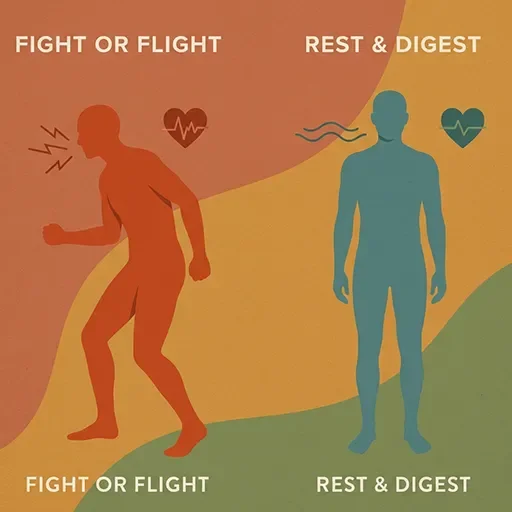
Slow breathing activates the parasympathetic nervous system, shifting your body from "fight-or-flight" to "rest-and-digest."
A major 2022 meta-analysis of over 200 studies confirmed that voluntary slow breathing reliably increases heart rate variability — a key marker of how well your nervous system can shift between alert and relaxed states. Higher HRV is consistently linked with better emotional regulation and lower anxiety.
In practical terms: slow breathing doesn't just feel calming — it physically changes your body's stress chemistry, and it does so faster than almost any other technique available.
Five Evidence-Based Breathing Techniques for Anxiety
Each technique below works through the same core mechanism — activating the vagus nerve through slow, deliberate breathing. They differ in pacing, complexity, and which situations they're best suited for.
Box Breathing (4-4-4-4)
Inhale for 4 counts, hold for 4, exhale for 4, hold for 4. Repeat. This technique is taught to Navy SEALs and first responders for maintaining composure under extreme pressure.
In a 2023 Stanford randomized controlled trial, participants who practiced box breathing for 5 minutes daily over 28 days showed significant reductions in anxiety and improvements in mood. The equal inhale-exhale ratio keeps you focused without making you drowsy — making it ideal for work stress, presentations, or difficult conversations.
4-7-8 Breathing
Inhale for 4 counts, hold for 7, exhale for 8. Developed by Dr. Andrew Weil, a Harvard-trained integrative medicine physician, this technique is rooted in pranayama breathing traditions.
A 2023 clinical trial found that patients using 4-7-8 breathing had significantly lower anxiety scores than those using standard deep breathing. Another study showed the technique immediately lowered heart rate and blood pressure. The very slow rate (about 2–3 breaths per minute) produces a sedating effect, making it especially good for sleep anxiety and racing thoughts at night.
Diaphragmatic Breathing (Belly Breathing)
Deep breathing that engages the diaphragm, causing the belly to expand rather than the chest. When you're anxious, breathing tends to become shallow and chest-focused. Diaphragmatic breathing reverses this pattern, sending a direct signal of safety to your nervous system.
This technique has the broadest evidence base. An 8-week randomized trial found it significantly reduced cortisol levels and negative mood. The U.S. Department of Veterans Affairs recommends it as a core wellness practice. It's the simplest technique — just slow, deep belly breaths — and the best starting point for beginners.
Resonance Breathing (Coherent Breathing)
Breathing at a steady pace of about 5–6 breaths per minute, with equal inhales and exhales. At this rate, your cardiovascular and respiratory systems synchronize, producing the maximum calming effect.
Research shows that breathing at resonance frequency dramatically amplifies heart rate variability — a sign of a flexible, well-regulated nervous system. However, an important 2023 trial of 400 participants found that breathing at resonance frequency didn't outperform a general slow-breathing condition for psychological outcomes, suggesting that any form of structured slow breathing may be similarly beneficial.
Resonance breathing is best for daily preventive practice and long-term stress management — it's the technique most commonly used in biofeedback therapy.
Extended Exhale Breathing (Cyclic Sighing)
Any pattern where the exhale is significantly longer than the inhale. The most studied version is "cyclic sighing" — two short inhales through the nose followed by one long, slow exhale through the mouth.
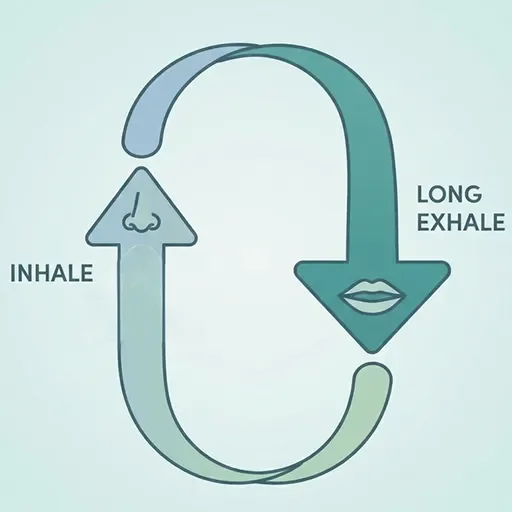
Cyclic sighing — two short inhales followed by one long exhale — outperformed other breathing techniques and mindfulness meditation in a Stanford head-to-head study.
This technique has the strongest comparative evidence. In the same Stanford trial mentioned above, cyclic sighing produced the greatest improvement in mood and was the only technique that significantly outperformed mindfulness meditation. Since vagal engagement occurs primarily during exhalation, extending that phase maximizes the calming effect per breath cycle.
This makes extended exhale breathing especially useful for acute anxiety relief, panic moments, and emotional overwhelm.
Which Technique Should You Use?
The honest answer from the research is that the best breathing technique is the one you'll actually practice consistently. The differences between techniques are smaller than the difference between doing any slow breathing versus doing none at all.
That said, here's a practical guide for matching techniques to situations:
For panic attacks or acute anxiety: Extended exhale breathing (cyclic sighing). The long exhale activates your calming response fastest. You can also combine it with grounding techniques.
For falling asleep: 4-7-8 breathing. The very slow rate and long hold are strongly sedating.
For work stress or presentations: Box breathing. The equal ratios keep you alert while reducing anxiety.
For daily practice: Resonance breathing or diaphragmatic breathing. Both are simple to sustain and build long-term resilience.
For beginners: Diaphragmatic breathing. No counting or holds — just slow, deep belly breaths.
How to Build a Breathwork Practice
Start Small and Stay Consistent
Research suggests that 5 minutes is the minimum effective duration for a breathing session. A systematic review of 58 trials found that shorter sessions were less likely to produce meaningful results. But don't feel like you need 20-minute sessions — a few focused minutes can help in the moment.
The Stanford trial found that benefits accumulate over days of consistent practice. Participants showed progressively greater improvements over 28 days. Think of it like exercise: one session helps, but regular practice transforms your baseline.
Pair Breathwork with Other Practices
Breathing techniques complement other evidence-based approaches nicely. Try a few minutes of slow breathing before a body scan meditation to deepen relaxation. Or combine breathwork with progressive muscle relaxation for a powerful wind-down before sleep.
Practice During Calm, Not Just Crisis
One of the most important findings is that breathing techniques work better during anxiety when you've already practiced them during calm moments. If the first time you try box breathing is mid-panic-attack, it's much harder to execute. Build the habit when you're relatively relaxed, and it'll be there when you need it.
When Breathwork Isn't Enough
Breathing exercises are a powerful self-care tool, but they have limits.
Breathwork can sometimes increase anxiety in people prone to panic attacks. Focusing on breathing can heighten awareness of bodily sensations in a way that feels uncomfortable — especially techniques involving breath holds. If a particular technique makes things worse, switch to simple diaphragmatic breathing or stop and try again later.
Breathwork is best understood as a complement to therapy, not a replacement. If your anxiety is persistent, interferes with daily life, or includes symptoms like panic attacks or obsessive thoughts, evidence-based therapies like CBT or ACT can help address root causes. A 2021 review in Clinical Psychology Review noted that CBT could benefit from incorporating more breathing interventions — suggesting breathwork and therapy are most powerful together.
If you're experiencing a mental health crisis, please reach out to a professional or contact the 988 Suicide & Crisis Lifeline (call or text 988).
-Tim, Founder of Wellness AI
About the Author
Dr. Timothy Rubin holds a PhD in Psychology with expertise in cognitive science and AI applications in mental health. His research has been published in peer-reviewed psychology and artificial intelligence journals. Dr. Rubin founded Wellness AI to make evidence-based mental health support more accessible through technology.
Try Guided Breathwork and Meditation
Wellness AI creates personalized guided breathing exercises and meditations tailored to your specific anxiety patterns.


FAQ: Breathwork for Anxiety
How long does it take for breathing exercises to reduce anxiety?
Most people feel some relief within 2–3 minutes. Research shows measurable physiological changes within a single 5-minute session, with long-term benefits building over weeks of daily practice.
Can breathing exercises stop a panic attack?
Extended exhale breathing can help by directly activating your calming nervous system response. If focusing on your breath increases panic, try a grounding technique first and return to breathwork once the peak passes.
Is 4-7-8 or box breathing better for anxiety?
They serve different purposes. 4-7-8 is more sedating and suited for sleep anxiety, while box breathing keeps you alert and focused. Consistent practice matters more than the specific technique.
How often should I practice breathwork?
Daily practice of at least 5 minutes produces the best results. One study showed progressively greater mood improvements over 28 days of daily sessions.
Can breathwork make anxiety worse?
For most people, no. However, people with panic disorder may find breath-hold techniques uncomfortable. If this happens, switch to simple diaphragmatic breathing without holds.
What's the best breathing technique for sleep?
The 4-7-8 method is designed for relaxation and sleep. Its very slow rate and long exhale produce a strongly calming effect. See our guides on meditation for better sleep and CBT for insomnia for more strategies.
Does the specific breathing technique really matter?
The largest controlled trial on this question (400 participants) found that specific patterns didn't outperform general slow breathing for psychological outcomes. The act of deliberate, structured practice matters more than the exact technique.