AI Therapy vs Traditional Therapy: An Honest Comparison (2026)
Author: Dr. Timothy Rubin, PhD in Psychology
Originally Published: April 2026
Last Updated: April 2026

AI therapy and traditional therapy each have distinct strengths — knowing what you need is the first step to choosing the right support.
Disclosure: I'm the founder of Wellness AI, an AI therapy app that is mentioned in this article. I have a financial interest in the AI therapy space. I've done my best to present this comparison fairly, citing peer-reviewed research throughout and including limitations of AI therapy alongside its potential benefits. Where I have opinions, I've labeled them as such.
Important: AI therapy apps are wellness tools, not licensed mental health treatment. No AI therapy app has FDA clearance for treating mental health conditions. If you're in crisis, contact the 988 Suicide & Crisis Lifeline (call or text 988) or the Crisis Text Line (text HOME to 741741).
Contents
- The Access Problem That Created AI Therapy
- What the Research Actually Shows
- Head-to-Head Comparison
- When to Choose Traditional Therapy
- When AI Therapy Makes Sense
- What to Look For in an AI Therapy App
- The Hybrid Approach: Using Both Together
- Safety Concerns and Regulation
- A Space That's Evolving Fast
- FAQ
AI therapy apps have gone from novelty to mainstream in under two years. A 2025 clinical trial published in NEJM AI found that an AI therapy chatbot significantly reduced symptoms of depression and anxiety. In a blinded evaluation study, licensed clinicians who were shown written therapeutic advice couldn't reliably distinguish between AI-generated and expert-authored responses — and actually rated the AI responses higher for emotional and motivational empathy. Perhaps most telling: 93.5% of participants preferred the advice they believed came from an expert, regardless of its actual origin.
It's worth noting this study evaluated written advice vignettes, not live psychotherapy sessions — how AI performs in real-time therapeutic conversations is a different question.
But does that mean AI therapy can replace a human therapist? The honest answer is: it depends on what you need. This guide breaks down what the research actually shows, where each approach excels, what each costs, and how to decide what's right for you.
The Access Problem That Created AI Therapy
AI therapy didn't emerge because people wanted to talk to a chatbot. It emerged because most people who need mental health support can't get it.
The numbers are stark: an APA survey found that 56% of psychologists had no openings for new patients, with average wait times stretching to three months or more. Over 150 million Americans live in federally designated Mental Health Professional Shortage Areas. And cost is consistently among the top barriers — affordability remains one of the most commonly cited reasons adults with mental illness don't receive treatment.
Traditional therapy runs $100 to $200+ per session, and online platforms like BetterHelp cost $280 to $400 per month. AI therapy apps don't fully solve this problem. But at $0 to $30 per month with zero waitlists and 24/7 availability, they may expand access for people who would otherwise get no support at all.
What the Research Actually Shows
Where AI Therapy Performs Well
The strongest evidence for AI therapy comes from structured, evidence-based interventions. The NEJM AI Therabot trial (2025) — a randomized controlled trial with 210 adults — found that participants using a custom-built AI therapy chatbot experienced a 51% reduction in depression symptoms and a 31% reduction in anxiety symptoms, assessed at eight weeks following a four-week intervention period.
The comparison group was a waitlist control (no treatment), not human therapy — so these results show AI therapy is better than nothing, but don't tell us how it compares to working with a human therapist directly. The study was also relatively small (N=210) and used a research-specific chatbot, not a commercially available app.
A meta-analysis of AI chatbot interventions found statistically significant improvements in depression and anxiety symptoms across multiple studies, with therapeutic effects beginning at four weeks and intensifying after eight weeks of use. Research on CBT-based AI interventions consistently shows that apps using structured therapeutic techniques can deliver measurable symptom relief, particularly for anxiety and depression.
Where Human Therapists Still Excel
The research is equally clear about what AI can't match. A study published by the American Psychiatric Association found that human therapists significantly outperformed AI in key therapeutic skills like agenda-setting, eliciting feedback, and applying CBT techniques with nuance.
The Stanford Human-Centered AI Institute raised serious concerns about AI in mental health, including the risk that chatbots can increase stigma toward certain conditions, provide inappropriate crisis responses, and lack the ethical judgment needed for complex clinical situations.
And a critical safety finding: a 2025 study published in Nature Scientific Reports tested 29 AI chatbot agents on standardized suicidal ideation scenarios and found that none met criteria for an "adequate" response, though roughly half met a less stringent "marginal" threshold. A separate Brown University study identified 15 recurring ethical failures across major AI models, including cases where chatbots provided harmful information instead of redirecting to crisis resources.
The Long-Term Question
One important caveat: while short-term effectiveness is well-supported, long-term durability is less clear. A meta-analysis of 30 randomized controlled trials (6,100 participants) found that while AI therapy produced meaningful post-intervention improvements for depression (medium effect size), these benefits were substantially smaller at 6-to-12-month follow-up (small effect size). For anxiety, the long-term improvements did not reach statistical significance.
This contrasts with human-delivered CBT, where the skills and insights gained tend to persist after treatment ends — what therapists call "durable change." It suggests AI therapy may work best with ongoing, consistent use rather than as a time-limited intervention.
Head-to-Head Comparison
| Traditional Therapy | AI Therapy | |
|---|---|---|
| Cost | $150–250/session; $280–400/mo (online) | $0–30/month |
| Availability | Scheduled appointments, often weeks-long waitlists | 24/7, no waitlists |
| Consistency | Therapist may cancel, reschedule, or leave practice | Always available, never changes |
| Personalization | Deeply personalized; reads body language, tone | Text/voice only; improving with memory features |
| Evidence base | Decades of clinical research | Growing rapidly; short-term results promising |
| Crisis handling | Trained to recognize and respond to emergencies | Improving but less reliable than humans |
| Diagnosis | Can formally diagnose conditions | Cannot diagnose |
| Medication | Psychiatrists can prescribe | Cannot prescribe |
| Privacy | Often protected by professional confidentiality and HIPAA | Varies by app; some use anonymized data for training |
| Therapeutic relationship | Real human connection, accountability | Consistent but lacks genuine empathy |
| Meditation/relaxation | May recommend; doesn't provide directly | Some apps include meditation or relaxation features |
When to Choose Traditional Therapy
Traditional therapy is the right choice when:
- You need a formal diagnosis (PTSD, bipolar disorder, OCD, personality disorders)
- You need medication evaluation or management
- You're dealing with severe depression, active suicidal ideation, or self-harm
- You're processing complex trauma or grief
- You want the accountability and depth of a real human relationship
- Your insurance covers it — this changes the cost equation significantly
- You have a child or adolescent who needs treatment
These aren't limitations of AI that will be "solved" with better technology. Diagnosis, medication, and the kind of deep relational work that processes trauma require a trained human.
When AI Therapy Makes Sense
AI therapy is worth considering when:
- Cost is a barrier and you can't access traditional therapy
- You're on a waitlist and need support in the meantime
- You're dealing with everyday anxiety, stress, or mild-to-moderate depression
- You want daily practice with CBT techniques or meditation, not just once-a-week sessions
- You prefer the privacy of talking to an AI — no judgment, no awkwardness
- You want support at 2 AM when anxiety won't let you sleep
- You're supplementing human therapy between sessions
Many people find that AI therapy works best not as a replacement, but as a complement — providing daily CBT practice and support between weekly human sessions. The use of AI tools in mental health contexts is growing, even as the profession maintains appropriate caution about limitations and risks.
What to Look For in an AI Therapy App
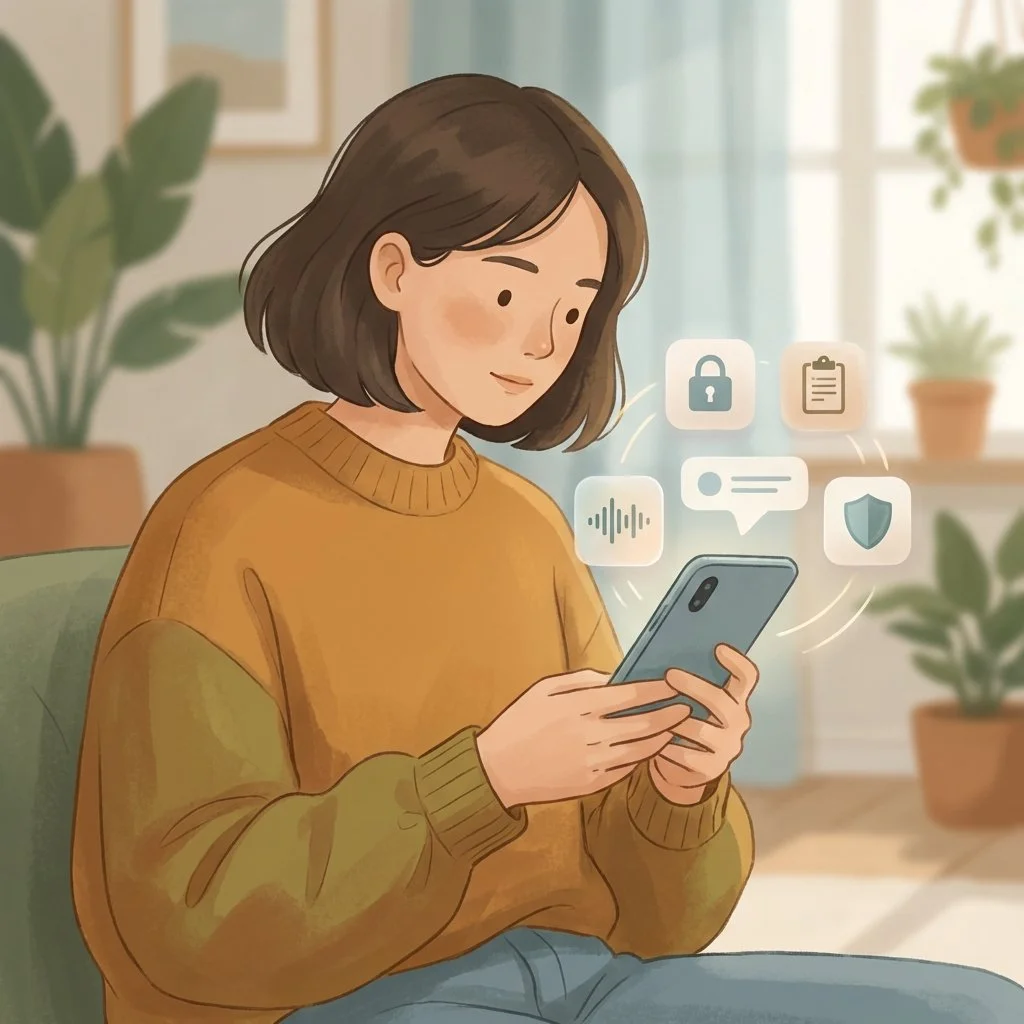
Choosing the right AI therapy app means looking beyond marketing claims at privacy practices, therapeutic approach, and safety features.
If you decide to try AI therapy, the quality difference between apps is significant. Here's what matters:
Therapeutic approach: Look for apps grounded in evidence-based methods — CBT, DBT, or ACT. Avoid apps that are just general chatbots rebranded as "therapy."
Conversation quality: The biggest practical difference is whether the AI feels like a real conversation or a scripted exercise. Fully generative AI tends to feel more natural than hybrid rule-based systems.
Cross-session memory: Real therapy builds on previous sessions. Apps with memory can track your progress, notice patterns, and reference what you've discussed before.
Privacy policy: You're sharing vulnerable information. Check whether the app uses your conversations to train its AI models, how data is stored, and whether conversations are end-to-end encrypted.
Crisis detection: Any reputable AI therapy app should recognize signs of crisis and direct you to the 988 Suicide & Crisis Lifeline or emergency services.
Relaxation and coping tools: Some apps integrate meditation, breathing exercises, or grounding techniques alongside therapy conversations — helpful since learning to calm your nervous system is an important part of managing anxiety and depression.
The Hybrid Approach: Using Both Together
The emerging consensus among researchers is that the most promising model isn't AI or human therapy — it's both working together. And the evidence is starting to back this up.
A 2025 NHS study published in JMIR tracked 244 patients receiving group CBT across five UK clinics. Patients who used an AI-enabled between-session support tool showed significantly higher rates of recovery, attended more sessions, and had fewer dropouts compared to those using traditional paper workbooks.
A separate study by Eleos Health found that AI-augmented therapy increased patient session attendance by 67% and produced significantly greater symptom improvement than treatment as usual — though it's worth noting this was an industry-funded study by an AI therapy company.
The early evidence suggests that AI tools between sessions may help people practice CBT techniques, process daily stressors, and track their mood more consistently. Human therapy provides the depth, nuance, and clinical expertise that AI can't match.
The APA's 2025 Practitioner Pulse Survey (N=1,742 psychologists) found that 56% had used AI tools in their work at least once in the past year — up from 29% in 2024. While most use is still administrative (writing emails, summarizing notes), with only 5% reporting chatbot assistance for patients, the trend suggests growing comfort with AI in therapeutic contexts.
If you're currently in therapy, consider asking your therapist how they feel about you using an AI tool between sessions. Some therapists may be open to it as a supplement to your work together.
Safety Concerns and Regulation

Safety and regulation remain the biggest open questions in AI therapy — and the landscape is changing fast.
It's important to acknowledge that AI therapy is not without real risks, and the regulatory landscape is still catching up.
Safety incidents have brought AI chatbot risks into sharp focus. Multiple lawsuits filed in 2024 and 2025 have alleged that interactions with AI companion chatbots contributed to severe harm, including the deaths of minors. While these involved general-purpose companion chatbots rather than therapy-specific apps, the cases underscore the stakes when vulnerable people — especially young people — form deep emotional attachments to AI systems without adequate safety guardrails.
Regulatory responses are emerging. Several U.S. states have begun introducing legislation around AI-powered mental health tools, and the EU's AI Act includes provisions that may apply to certain mental health AI applications depending on their use case. The regulatory landscape is evolving quickly, and what's permitted today may change. No AI therapy app currently has FDA clearance for treating mental health conditions — this is a wellness tool space, not a regulated medical device space.
Emotional dependency is a growing concern researchers are studying. As AI conversational agents become more engaging and empathetic, there's a risk that some users — particularly those who are socially isolated — may develop unhealthy attachment patterns. This is an area that needs more research and that responsible AI therapy developers should actively address.
These risks don't mean AI therapy should be avoided. They mean it should be approached with clear eyes, appropriate expectations, and strong safety systems in place.
A Space That's Evolving Fast
This field is changing rapidly in both directions — capabilities are improving, but so is scrutiny of risks and regulation.
Woebot, once considered the most research-backed AI therapy app with an FDA Breakthrough Device Designation, shut down its consumer app in June 2025 due to unsustainable FDA compliance costs — pivoting instead to B2B healthcare partnerships.
Meanwhile, new apps continue to launch, and existing ones are adding features like voice therapy, cross-session memory, and personalized meditation. The AI therapy app you choose today may look very different in a year.
Choose an app with a clear business model, transparent privacy practices, robust crisis detection, and a team that's actively developing the product. Your therapy conversations are deeply personal — you want to trust that the platform will be around to keep them safe.
If you or someone you know is in crisis, please contact the 988 Suicide & Crisis Lifeline by calling or texting 988, or reach out to the Crisis Text Line by texting HOME to 741741.
-Tim, Founder of Wellness AI
About the Author
Dr. Timothy Rubin holds a PhD in Psychology with expertise in cognitive science and AI applications in mental health. His research has been published in peer-reviewed psychology and artificial intelligence journals. Dr. Rubin founded Wellness AI to make evidence-based mental health support more accessible through technology.
Find the Right Support for You
Try Wellness AI for AI therapy and personalized meditation — designed to complement your mental health journey.


FAQ
Is AI therapy as effective as traditional therapy?
Short-term research is promising — a 2025 NEJM AI trial found a 51% reduction in depression symptoms compared to no treatment. However, a meta-analysis of 30 trials found benefits were substantially smaller at 6-to-12-month follow-up. No AI therapy app has FDA clearance for treating mental health conditions.
How much does AI therapy cost compared to traditional therapy?
Traditional therapy costs $150 to $250 per session, and online platforms like BetterHelp cost $280 to $400 per month. AI therapy apps range from free to about $30 per month — roughly 90 to 95% less expensive. If cost is your main concern, our guide to cheaper alternatives to BetterHelp compares the most affordable human and AI options.
Can AI therapy replace a human therapist?
For mild-to-moderate anxiety and depression, AI therapy can provide meaningful support. For severe conditions, complex trauma, or situations requiring diagnosis and medication, human therapy remains essential. Many people find the best results using both together.
Is AI therapy safe?
Reputable apps include crisis detection, but a 2025 Nature study found none of 29 tested chatbots met criteria for an adequate crisis response. AI therapy apps are wellness tools and should not replace professional care in crisis situations.
Does AI therapy work for anxiety?
CBT-based AI therapy has shown particular promise for anxiety. Apps that combine therapy with relaxation tools like guided meditation and grounding techniques may be especially helpful.
Can I use AI therapy between sessions with my human therapist?
Yes. AI therapy can help you practice CBT techniques daily and track your mood between appointments. Some apps are beginning to offer session summaries that can be shared with your therapist.
Is AI therapy regulated?
The regulatory landscape is developing and varies by jurisdiction. No AI therapy app has FDA clearance. Several U.S. states and the EU are actively considering or implementing regulations around AI in mental health.
Is AI therapy safe for teens and children?
This is an area of active concern. Research has found major AI chatbots were not reliably safe for teen mental health support. Parents should consult a pediatric mental health professional before allowing minors to use AI therapy tools.
Related Reading
Hands-on comparison of the top consumer AI therapy apps — conversation quality, memory, meditation, and privacy Wellness AI vs Wysa: Which AI Therapy App Is Right for You?
A founder-written head-to-head on conversation style, clinical research, meditation, pricing, and privacy AI Therapy for Relationship Anxiety
Which AI therapy apps work best for anxious attachment, texting spirals, and breakup recovery Cheaper Alternatives to BetterHelp
Affordable human-therapist platforms and AI therapy apps that cost a fraction of BetterHelp